How HVAC Systems Can Spread Mold After Water Damage
An HVAC system moves large volumes of air through every room it serves, which means any mold growth inside the coils, drain pan, ductwork, or air handler can be distributed throughout a property every time the system runs. This is one of the more overlooked risks after a Phoenix water damage event — the visible damage may be limited to one room, but an untreated HVAC system can turn that into a building-wide air quality issue. Read more about our team and certifications if you want to know who will be showing up at your door. If a situation like this is happening right now, you can request emergency service and we'll get moving.
Common Points of Mold Growth Inside HVAC Systems
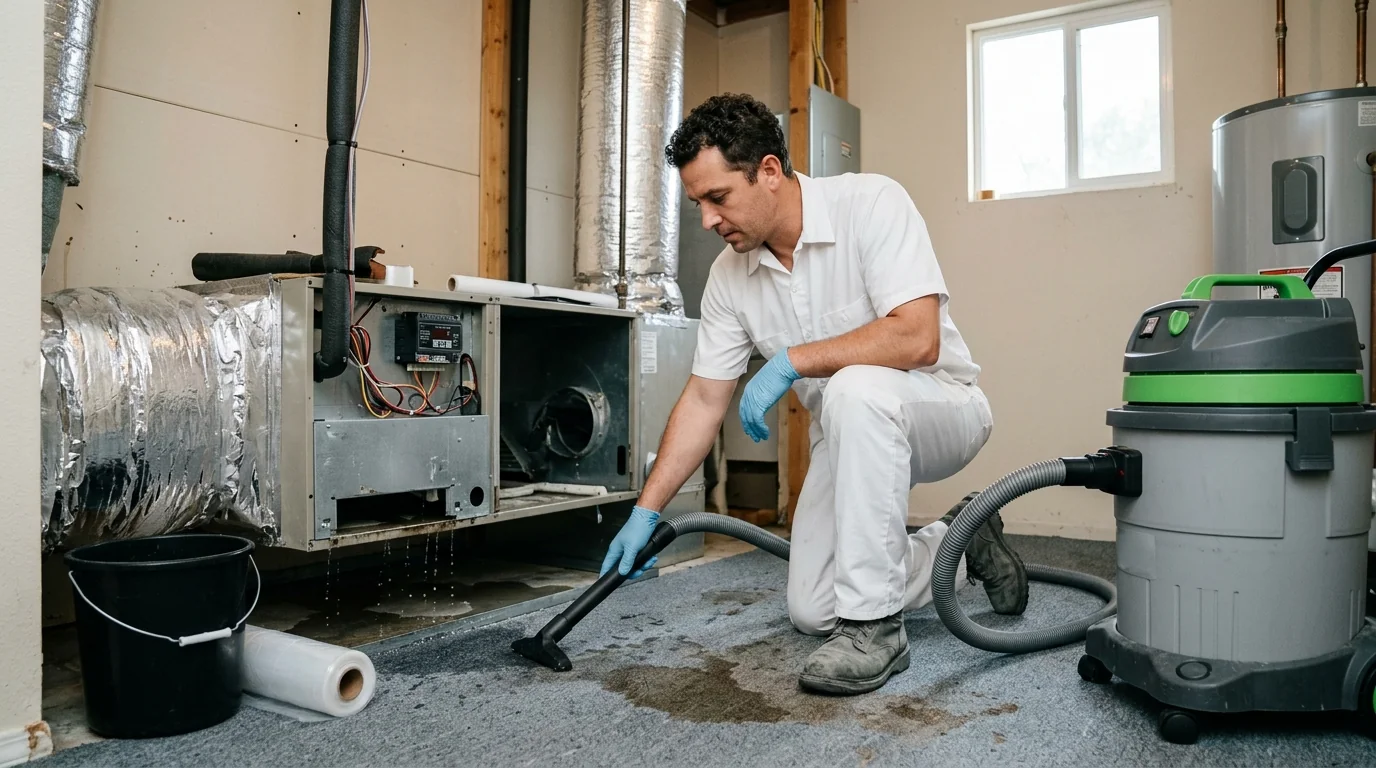
The evaporator coil and drain pan inside the air handler are naturally damp environments even in normal operation, which makes them a common starting point for mold growth if the system was affected by a broader water event or a condensate line issue. Insulation inside ductwork, particularly flexible duct liner, is another common growth point once it becomes saturated. If you want to go deeper on this, our guide on Preventing Mold During Flood Damage Repair covers it well.
See our guide on AC condensate overflow for a related and common cause of localized HVAC water damage in Phoenix homes. We also break this down further in Asbestos and Lead Concerns During Phoenix Water Damage Restoration.
What Proper HVAC Water Damage Cleanup Involves
Cleanup starts with the system powered off to prevent further spore circulation while the assessment is underway. Coils, drain pans, and accessible ductwork are cleaned and treated with an EPA-registered antimicrobial product, referencing guidance from the EPA's mold prevention resources, while any ductwork or components too contaminated to clean effectively are replaced. For background from an independent source, see the CDC's mold exposure and health information.
Confirming the System Is Clean Before Restarting
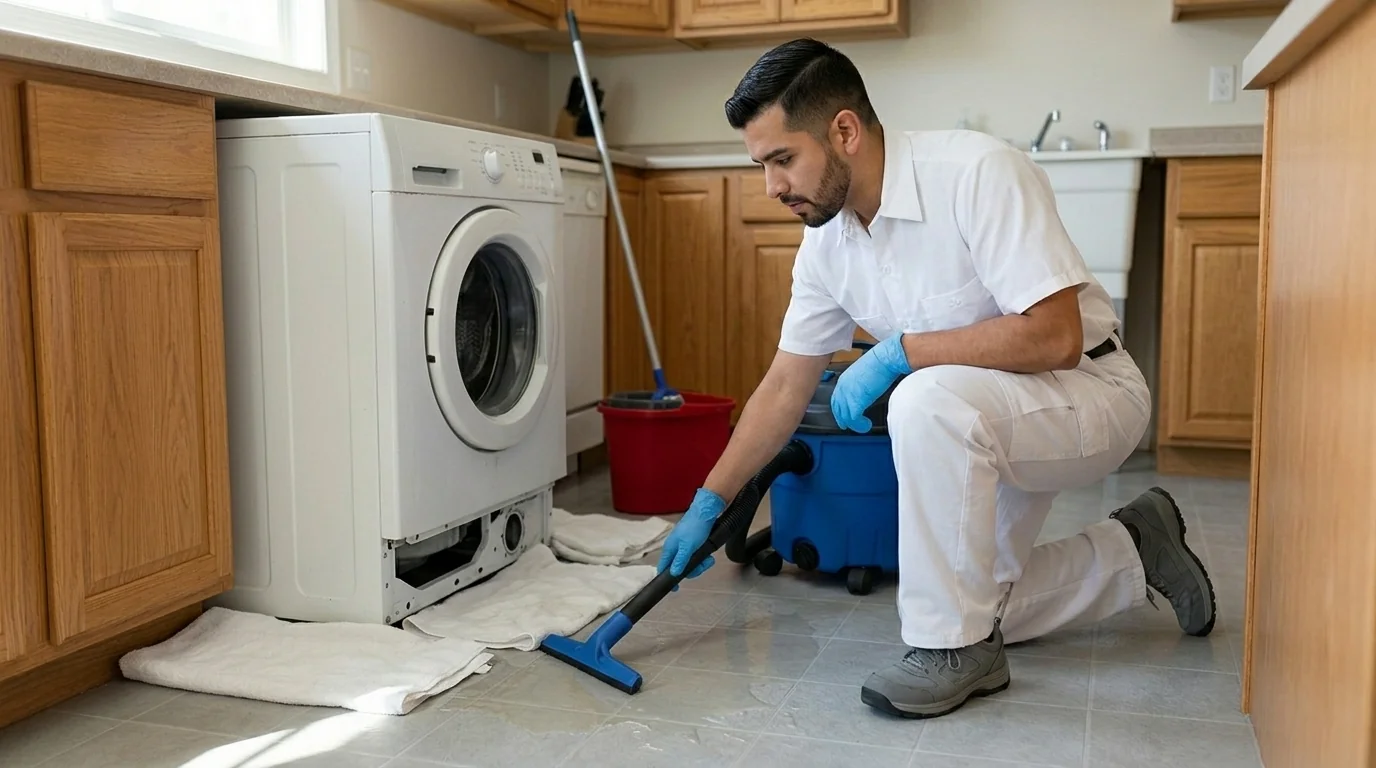
After cleaning, some restoration companies recommend an air quality test to confirm mold spore counts inside the ductwork have returned to a normal range before the system resumes full-time operation. This step provides documented assurance, particularly for households with respiratory sensitivities or after a significant water event. the IICRC S500 water damage restoration standard has useful guidance on this if you want to read further.