Why Wet Ductwork Is a Whole-House Problem
When water reaches ductwork — from a roof leak, an attic HVAC unit condensate overflow, or general flooding that reaches floor-level return ducts — the contamination doesn't stay contained to one spot. Every time the system cycles on, air moving through the wet or previously wet ducts can carry moisture, odor, and in some cases mold spores into every room the ductwork serves, turning a localized problem into a building-wide one. You can learn more about our Phoenix water damage restoration company and how we help Phoenix homeowners recover quickly.
This is why HVAC water damage cleanup treats ductwork as a priority component rather than an afterthought, even when the visible water damage is elsewhere in the home. Read more about our team and certifications if you want to know who will be showing up at your door.
Assessing Which Duct Sections Are Affected
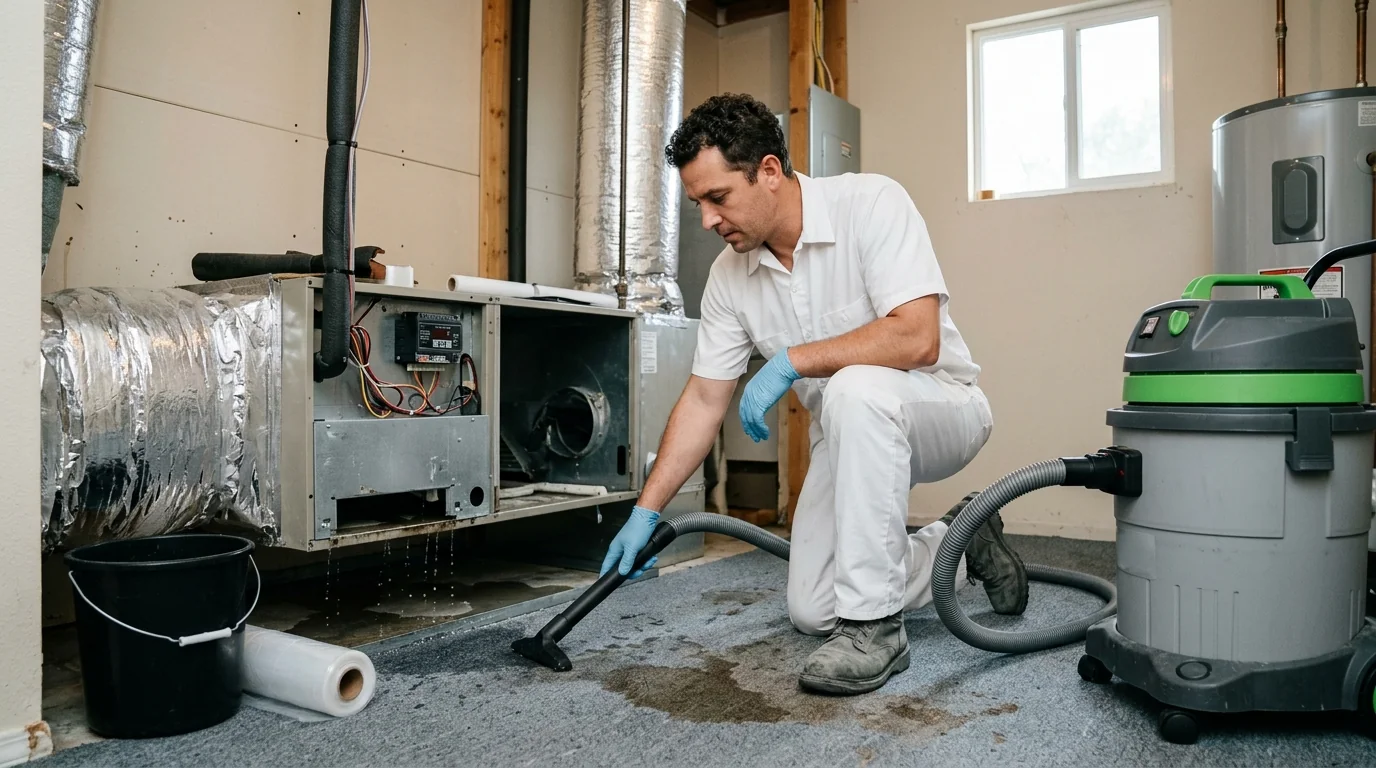
Technicians inspect duct runs using cameras and moisture meters to determine which sections were directly wet versus which sections are simply downstream of an affected area. Flexible ductwork with fiberglass insulation liner is generally more vulnerable to permanent contamination than smooth rigid metal ductwork, since the insulation and interior liner can absorb and hold moisture. If you want to go deeper on this, our guide on AC Condensate Line Overflow Extraction: A Phoenix Summer Problem covers it well.
Return air ducts, which are often located low in a home near the floor, are particularly susceptible during flooding events, while supply ducts run through walls and ceilings are more commonly affected by roof or plumbing leaks. We also break this down further in HVAC Water Damage in Phoenix: Prevention and Emergency Response.
Cleaning vs. Replacing Ductwork
Rigid metal ductwork that was exposed to clean water briefly can often be cleaned, disinfected, and dried in place. Flexible ductwork or any duct section exposed to contaminated water is generally replaced rather than cleaned, since the interior insulation liner cannot be fully decontaminated once saturated. For background from an independent source, see the Department of Energy's HVAC and ventilation guidance.
An antimicrobial treatment is typically applied to any ductwork sections that are cleaned and retained, as a precaution against residual mold spore growth. the EPA's mold prevention guidance has useful guidance on this if you want to read further.
Verifying the System Is Safe to Run Again
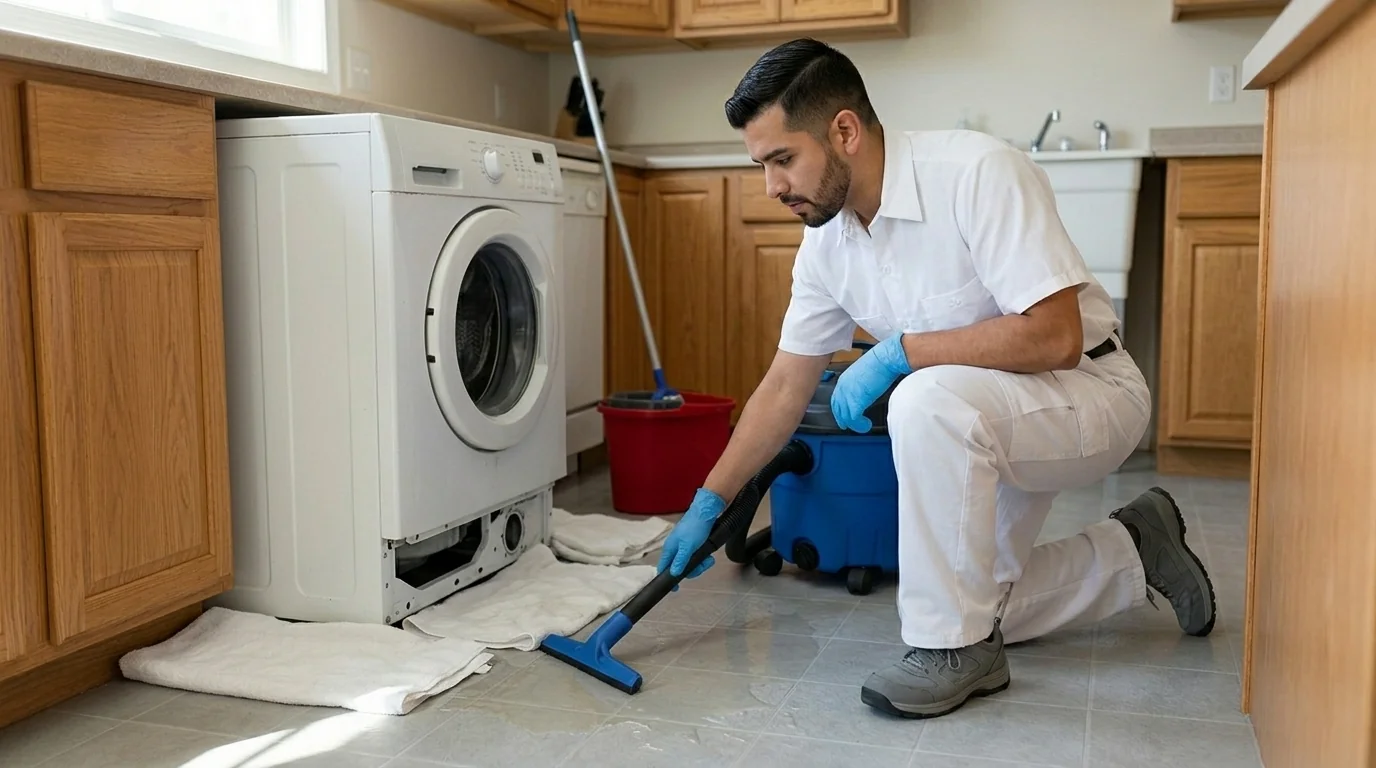
Before an HVAC system is put back into regular operation after water damage cleanup, technicians confirm the blower motor, coils, and any electrical components that may have been affected are dry and functioning properly, in addition to the ductwork itself. Running a system with unresolved wet insulation or a compromised duct section can reintroduce moisture and odor into the home even after the primary cleanup is complete. You can also review the IICRC S500 restoration standard for an outside perspective on this.