Phoenix air conditioning systems run for 9–10 months of the year — far longer than in most U.S. cities — which means the HVAC system components responsible for managing condensate moisture are in near-continuous operation. The evaporator coil, drain pan, and condensate drain line of a typical Phoenix residential HVAC system process dozens of gallons of condensate per day during peak summer cooling.
How HVAC Systems Produce and Manage Water
Air conditioning works by passing warm indoor air across a refrigerant-cooled evaporator coil. The coil surface is cooler than the air's dew point, causing moisture to condense on the coil fins and drip into the drain pan below. It's worth browsing our full list of restoration services to see which one matches what you're dealing with.
The condensate drain line is a simple PVC pipe that runs from the drain pan to a discharge point — typically a plumbing drain connection, an exterior wall discharge, or a dedicated condensate pump system. In Phoenix homes with air handlers located in attics (extremely common), the drain line runs down through the interior structure to its discharge point.
The Most Common HVAC Water Damage Scenarios
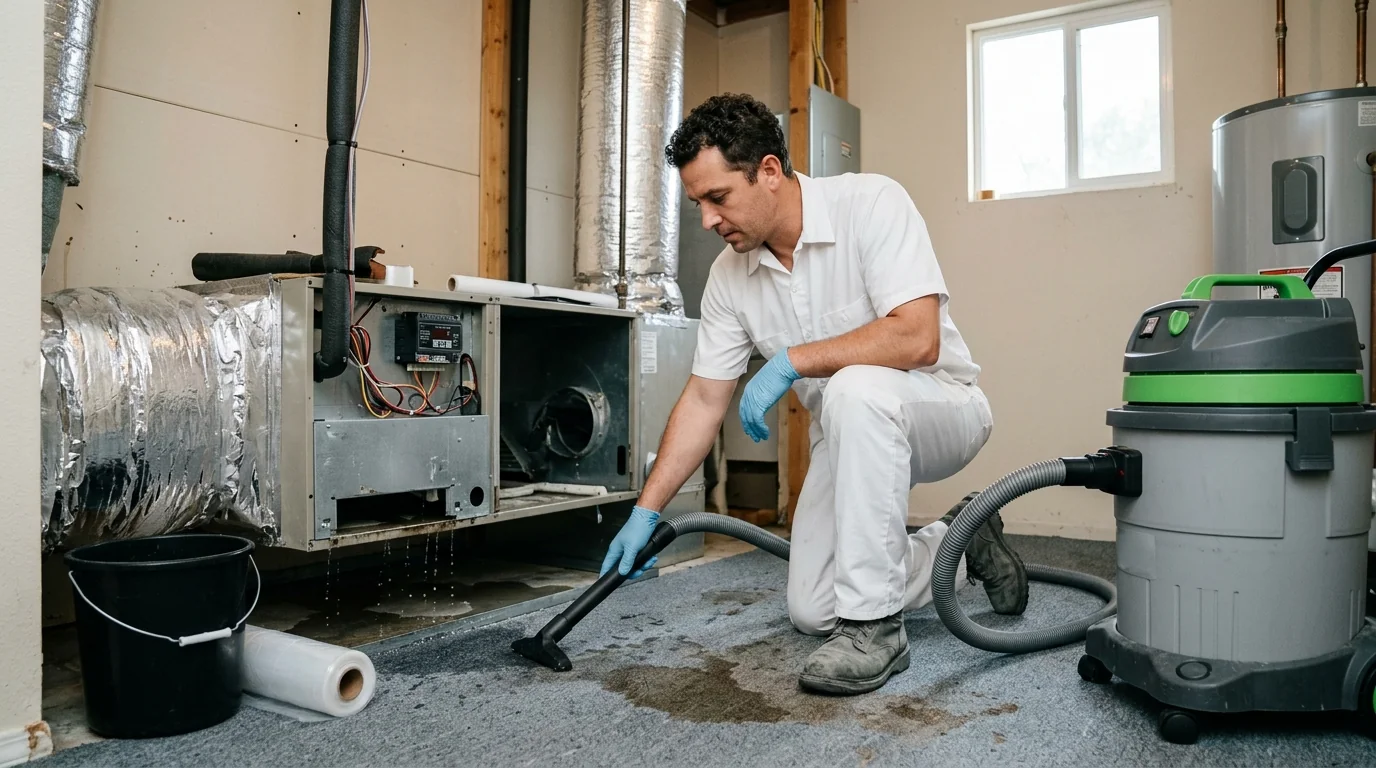
Clogged condensate drain line is by far the most common HVAC water damage cause in Phoenix. In the desert climate, condensate drain lines accumulate a distinctive sludge of algae, mineral deposits from Phoenix water, and wind-blown dust that enters the line at the open discharge end. the IICRC S500 standard sets the procedural benchmark restoration companies are expected to follow.
Evaporator coil icing occurs when refrigerant charge is low, airflow across the coil is restricted by a dirty filter, or ambient temperatures are too low for the system to operate correctly. Ice accumulation on the coil is insidious: the ice builds up overnight or during extended operation, then melts rapidly when the system shuts down or when airflow is restored — releasing far more water than the drain pan is designed to hold at once. If cost is on your mind, how our pricing works breaks down what typically drives the number up or down.
Air handler drain pan deterioration is a longer-term HVAC water damage risk in Phoenix properties. Most residential air handlers have plastic or sheet metal drain pans that degrade over 10–15 years of continuous operation in Phoenix's temperature extremes.
Responding to an Active HVAC Water Damage Event
When HVAC-related water damage is discovered — typically as ceiling staining or active dripping below an attic air handler — the first action is to turn off the HVAC system at the thermostat and then at the breaker to prevent additional condensate production. Do not attempt to restart the system until the drain line is cleared and the underlying cause of the overflow is identified and corrected by an HVAC technician. the EPA provides background on how moisture control prevents mold growth in buildings.
Document the damage before any cleanup begins — photographs of the ceiling staining, active dripping, and any affected floor or furniture surfaces establish the pre-mitigation condition for the insurance claim. Call your restoration company for an assessment: what appears to be a limited ceiling stain may represent significant moisture accumulation in the attic insulation and ceiling assembly above, which requires moisture mapping to fully characterize.
After the HVAC system is repaired by a licensed HVAC technician, restoration can proceed with full confidence that the moisture source is controlled. The restoration scope for an HVAC overflow event typically includes: removal of saturated attic insulation above the affected area, moisture assessment of the ceiling assembly and any framing members that were wet, structural drying of the ceiling cavity and affected room below, and antimicrobial treatment of all affected surfaces before reconstruction. If you want to go deeper on this, our guide on HVAC Water Damage Cleanup: Ductwork Contamination and Cleaning covers it well.
Preventive HVAC Maintenance for Phoenix Properties

Annual professional HVAC maintenance in April — before the cooling season begins — is the most effective preventive measure against HVAC water damage in Phoenix. This service should include condensate drain line cleaning, drain pan inspection and cleaning, evaporator coil cleaning, refrigerant charge verification, and airflow measurement. FEMA's National Flood Insurance Program explains how the National Flood Insurance Program covers flood losses.
Monthly condensate drain maintenance can be performed by homeowners between annual services. Pour 1 cup of white vinegar or a condensate drain treatment tablet into the air handler's condensate overflow port — typically located at the air handler unit, accessible through an access panel.
Install a secondary drain line float switch if your attic air handler lacks one or if the existing switch is not functional. This device detects when the condensate pan begins to fill — indicating a primary drain clog — and shuts off the system before overflow occurs.