Phoenix commercial kitchen water damage is among the most complex restoration scenarios. High-volume water equipment, food contamination, health department oversight, and the immediate revenue cost of closure demand specialized expertise and rapid coordination. Every hour of restoration timeline compressed directly reduces business interruption exposure.
Common Sources
Grease trap overflows are the most hazardous commercial kitchen source — a trap serviced behind schedule accumulates grease, food solids, and sewage until backup occurs. The discharge is Category 3 requiring full biohazard protocols, licensed waste disposal, and health department clearance before food service resumes. Read more about our team and certifications if you want to know who will be showing up at your door.
Commercial dishwashers at 140-180°F cycle hundreds of times per service. Pump seals, door gaskets, and connection fittings wear under these conditions. A seal failure mid-service releases hot water and wash chemicals across the floor, creating a slip hazard and contamination event requiring professional cleanup before service resumes.
Walk-in cooler condensate drainage failures develop slowly. Phoenix monsoon humidity increases cooler condensate production, and a clogged drain accumulates water beneath the unit, saturating the floor substrate. Commercial epoxy floors appear intact while water migrates in the substrate — invisible without professional moisture assessment. OSHA details the safety hazards workers face during flood cleanup.
Health Department Coordination
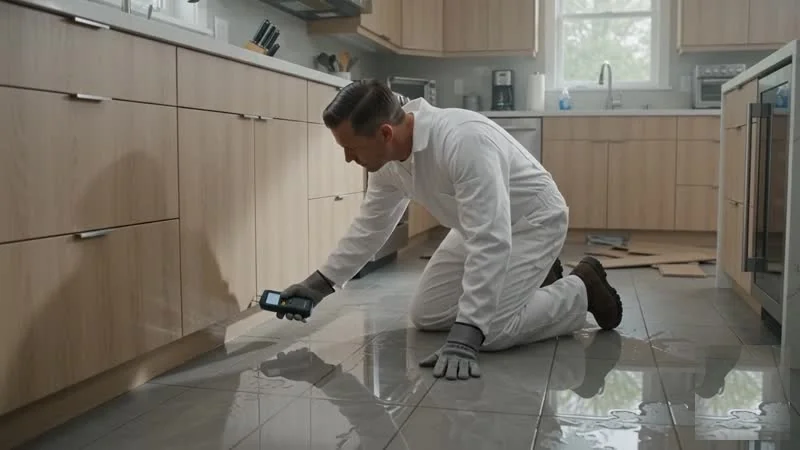
Any significant water event affecting food contact surfaces in a Maricopa County food service establishment must be reported to Environmental Services. Proactive contact with your health inspector at the earliest stage establishes the fastest reopening pathway rather than a reactive inspection after restoration.
Food safety certification of the restored kitchen requires documentation that all food contact surfaces have been properly cleaned and sanitized — your restoration company's decontamination documentation is the foundation of this record. Restoration companies experienced in commercial kitchen events format this documentation specifically for health department review.
Equipment in contact with contaminated water requires manufacturer-specified decontamination or service technician verification before returning to food service use. Coordinate with equipment service providers as part of the restoration process to ensure all re-certification requirements are addressed before reopening.
Restoration Process
Assessment includes: moisture mapping, water category classification, source control, food inventory assessment (all food exposed to water must be discarded), equipment status assessment, and regulatory notification — all simultaneously rather than sequentially to minimize closure duration. the Insurance Information Institute breaks down what standard homeowners policies do and do not cover for water damage. If a situation like this is happening right now, you can request emergency service and we'll get moving.
Extraction requires equipment compatible with kitchen flooring and contamination levels. The drainage infrastructure — floor drains, grease interceptors — must be functional before extraction can proceed. For grease events, grease trap service must be coordinated alongside extraction to prevent the restored system from immediately backing up again.
Drying a commercial kitchen requires managing differently than standard interiors. Equipment that cannot be moved creates drying challenges. All drying equipment must be food-service compatible — no petroleum-based lubricants that could contaminate food contact surfaces.
Business Interruption
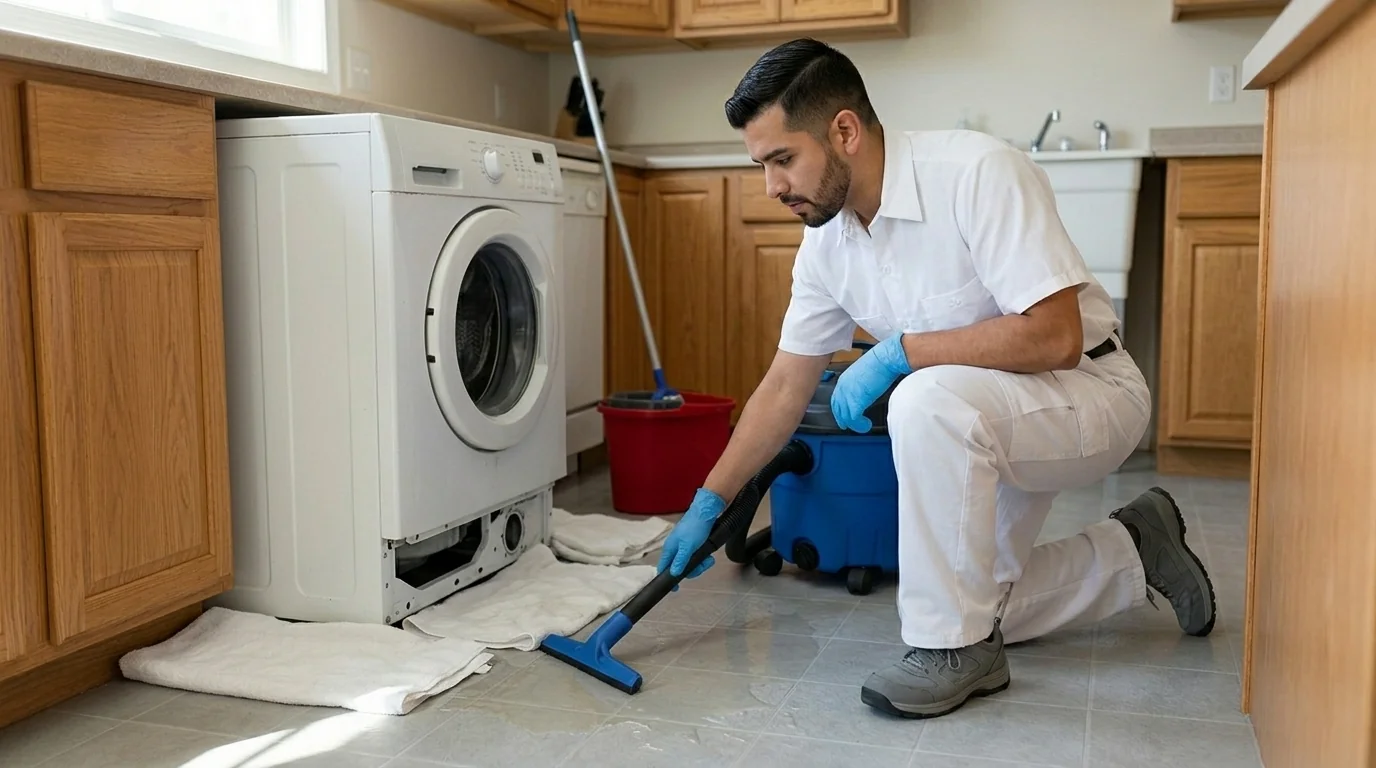
A Phoenix restaurant at $5,000 per day cannot absorb a two-week restoration as residential property tolerates a one-week drying program. Aggressive equipment deployment, multi-shift scheduling, and phased reopening planning — opening dining room while kitchen restoration continues — directly reduce business interruption claim amounts. the IICRC S500 standard sets the procedural benchmark restoration companies are expected to follow.
BI documentation requires: daily revenue for the affected period versus prior-year same-period, labor costs during closure, continuing fixed costs, and extra expenses maintaining partial operations. Engage your accountant from day one — the BI claim is typically the largest single component of a commercial kitchen water event.
Pre-planning — knowing where shut-offs are, having a restoration company relationship, understanding health department notification obligations — converts a chaotic emergency into a managed process. The difference between a 3-day versus 10-day reopening timeline is almost entirely the speed and preparedness of the initial response.