Most Phoenix homeowners who experience water damage have never gone through a professional restoration before and do not know what to expect from the process. Will they need to vacate the property?
Emergency Call and Dispatch
When you call our Phoenix emergency line, the dispatcher who answers immediately begins gathering information: the source of the water, the approximate area affected, the number of rooms involved, whether the water may be contaminated, and your address. This information determines what crew size and equipment load to dispatch — a single room with clean water requires different staging than a multi-room event or a sewage backup.
On arrival, the crew lead introduces the team and reviews the situation with you before any work begins. This walkthrough helps confirm the scope described by phone, identify any safety concerns (electrical hazards, structural risks, contamination), and answer your initial questions about the process.
Extraction equipment is staged based on the assessment walkthrough and begins operation as quickly as possible. The faster standing water is removed, the less material saturation occurs — every minute of delay after extraction equipment is running measurably reduces the final drying scope. the IICRC S500 standard sets the procedural benchmark restoration companies are expected to follow.
Assessment, Moisture Mapping, and Documentation
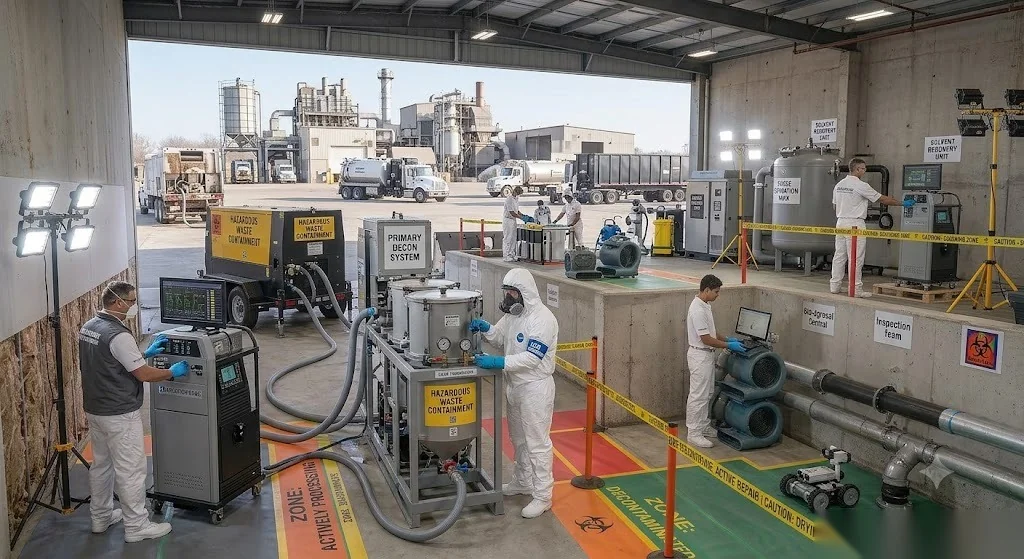
The formal moisture assessment is the technical foundation of the entire restoration project. Using thermal imaging cameras, pin meters, and pinless meters calibrated for specific materials, technicians map every affected location in the property — noting the specific moisture reading, the material, and the location on a floor plan.
Photography and video documentation accompany the moisture assessment. Every affected surface, piece of equipment, material staining, and water source is photographed from multiple angles.
The scope of work — the itemized list of every restoration action required — is developed from the moisture map and site assessment. This scope is prepared in adjuster-compatible line-item format and represents the technical basis for the insurance claim.
Structural Drying Program Execution
Drying equipment is deployed in a calculated pattern based on the psychrometric requirements of the specific drying chamber. Air movers are positioned to create continuous airflow across all wet surfaces; dehumidifiers are sized to maintain a downward humidity trajectory throughout the drying cycle. the EPA provides background on how moisture control prevents mold growth in buildings.
Daily moisture monitoring is the quality indicator that separates professional drying from equipment-and-hope approaches. Each day, technicians visit the property to take readings at every measurement point established in the initial moisture map.
Completion of the drying program is confirmed when every measurement point reaches its target moisture level — the level at which the material is safe from mold growth and in equilibrium with normal indoor conditions. This is documented in a final drying log and a clearance statement.
Reconstruction Handoff and Next Steps
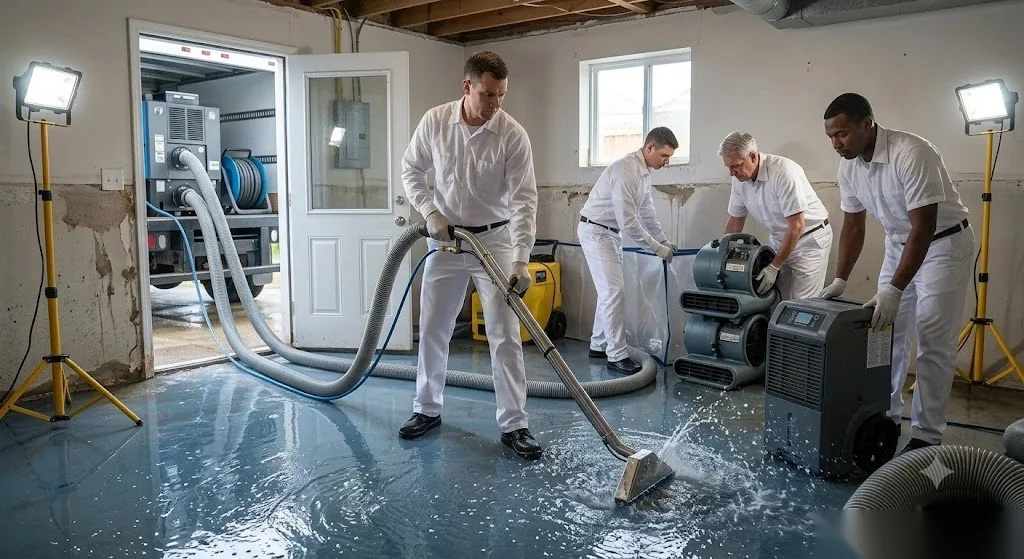
The restoration company delivers the property in a clean, dry, documented condition — ready for reconstruction. This handoff typically includes: the final moisture clearance document, the complete drying log, the scope of work with all completed line items, and photographs of the completed restoration. FEMA's National Flood Insurance Program explains how the National Flood Insurance Program covers flood losses.
Reconstruction — replacing drywall, installing new flooring, painting, and finishing — is a separate phase handled by a general contractor and is not part of the mitigation scope. Your insurance adjuster's scope will include reconstruction line items if applicable to your loss.
After reconstruction is complete, monitor the restored areas through the first monsoon season for any recurrence of moisture signs. If the original event involved a building envelope failure — a roof penetration, window seal failure, or block wall crack — verify that the permanent repair has been completed and waterproofed before that area is tested by another storm event.