Step One: Extraction
Carpet drying begins with extraction — removing as much standing water as possible using a truck-mounted or portable extraction unit before any drying equipment is introduced. This step alone can remove a significant majority of the water present, which meaningfully shortens the total drying time compared to skipping straight to air movement. If a situation like this is happening right now, you can request emergency service and we'll get moving. It's worth browsing our full list of restoration services to see which one matches what you're dealing with.
Technicians typically make multiple extraction passes over heavily saturated areas, since carpet and padding can hold more water than a single pass removes. If you want to go deeper on this, our guide on Carpet Drying: When Padding Must Be Replaced vs Saved covers it well. We also break this down further in How Long Does Carpet Drying Take After Water Damage?.
Step Two: Assessing the Padding
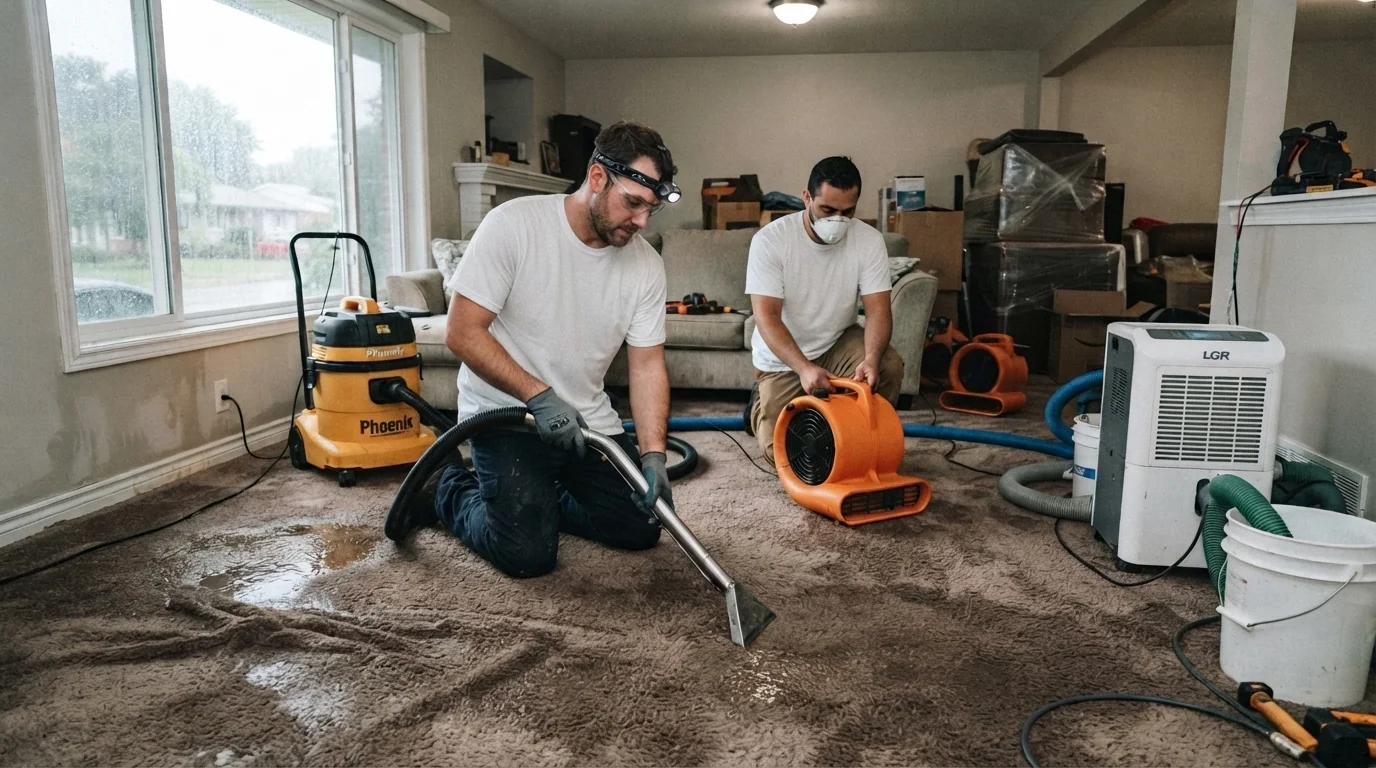
After extraction, the carpet is often pulled back at the edges to assess the padding underneath, since padding holds significantly more water than the carpet fiber itself and dries much more slowly. In many cases, saturated padding is removed and replaced rather than dried, particularly if the water was contaminated or the padding has been wet for an extended period. For a related situation, see our post on Flood Damage Repair for Hardwood Floors in Phoenix Homes.
Step Three: Setting Up Drying Equipment
Air movers are positioned at specific angles to create airflow across the carpet surface, and dehumidifiers are placed to manage the humidity the evaporating water releases into the room. The number and placement of air movers is calculated based on square footage and the level of saturation, not simply set up uniformly across the space. For background from an independent source, see the IICRC S500 restoration standard. the EPA's mold prevention guidance has useful guidance on this if you want to read further.
Step Four: Monitoring and Verification
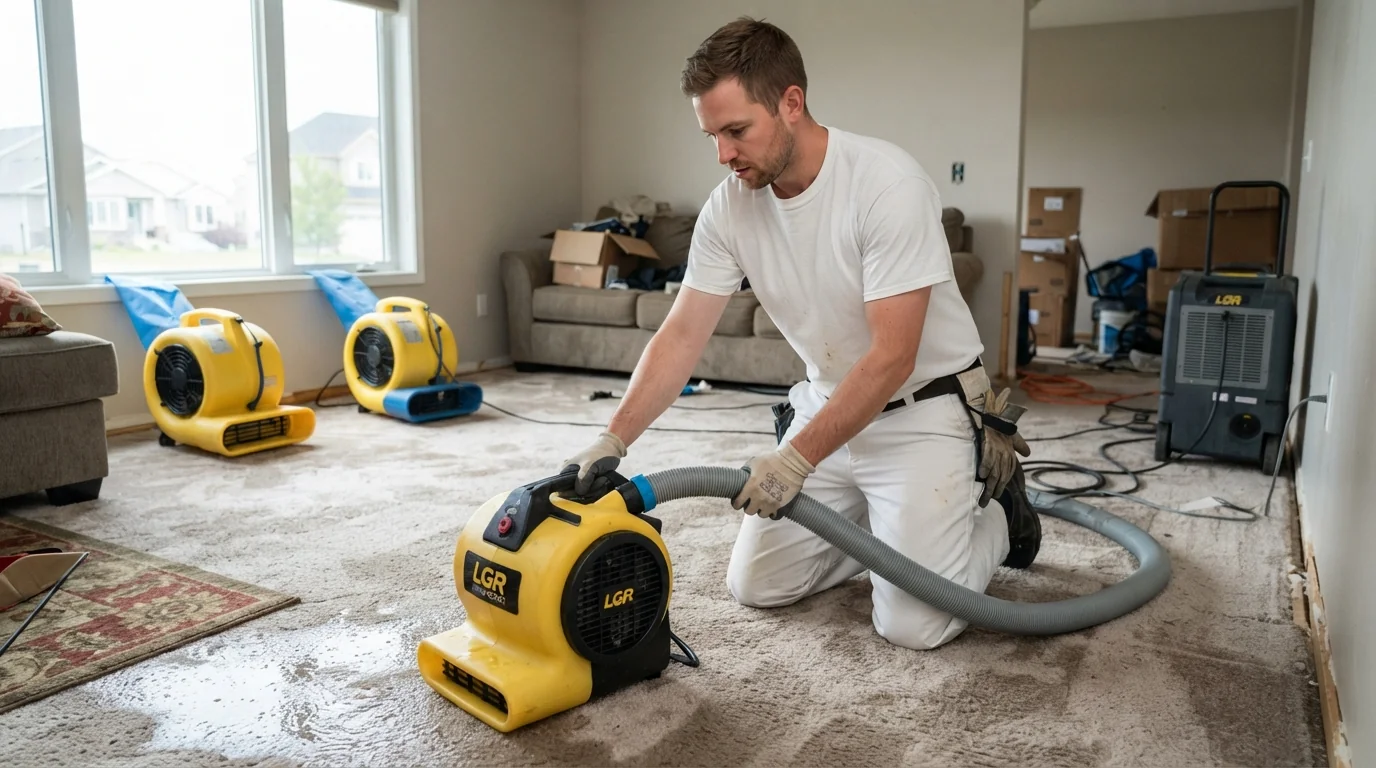
A technician returns daily to take moisture readings in the carpet, padding (if retained), and subfloor to track drying progress. Equipment typically runs for two to four days depending on the extent of saturation, and is only removed once readings confirm the materials have reached an acceptable dry standard. You can also review the Department of Energy's guidance on humidity and ventilation for an outside perspective on this.