How Flooding Affects Hardwood Flooring
Solid hardwood flooring absorbs water through its edges and the underside, causing the boards to swell and press against each other. This is what produces the cupping (edges higher than the center) commonly seen after a flood. If the flooring stays wet long enough, boards can buckle upward entirely, separating from the subfloor. Read more about our team and certifications if you want to know who will be showing up at your door.
The speed of water removal is the single biggest factor in whether hardwood can be saved. Floors extracted and dried within the first 24 to 48 hours have a meaningfully better chance of recovery than floors left wet for several days. If a situation like this is happening right now, you can request emergency service and we'll get moving.
The Drying Process for Hardwood
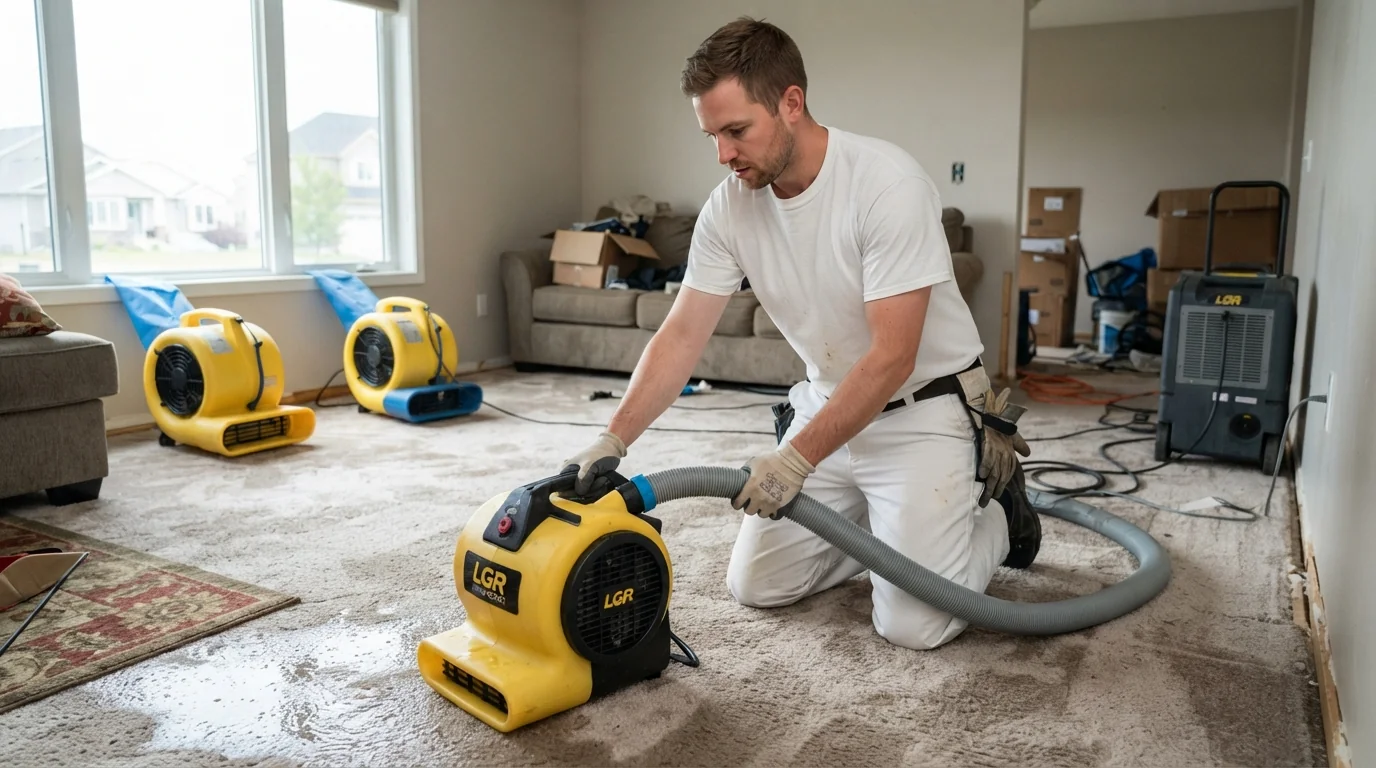
Specialized drying mats or floor drying systems are placed directly on the hardwood to pull moisture out from both the surface and, through vacuum pressure, from underneath the boards where standard air movers cannot reach effectively. This process is slower and more controlled than drying drywall or carpet, since drying hardwood too quickly can cause it to crack or split. If you want to go deeper on this, our guide on Carpet Drying Equipment: What Phoenix Restoration Crews Use covers it well.
Moisture readings are taken throughout the drying process to track how the wood is releasing water and to catch any risk of over-drying before it happens. We also break this down further in Carpet Water Damage Restoration: The Complete Phoenix Guide.
When Refinishing Is Enough vs. When Boards Must Be Replaced
If cupping resolves once the floor and subfloor reach an acceptable dry standard, sanding and refinishing can often restore the floor's appearance without full replacement. Boards that remain permanently cupped, buckled, or that show staining from contaminated water typically need to be individually replaced and blended into the surrounding floor. For background from an independent source, see the IICRC S500 restoration standard.
Engineered hardwood behaves differently than solid hardwood — its thin veneer layer over a plywood or composite core generally tolerates less drying and refinishing before replacement becomes the only option. the EPA's mold prevention guidance has useful guidance on this if you want to read further.
Preventing Future Hardwood Water Damage
After a flood repair, sealing floor edges properly, using area rugs with breathable backing near sinks or entryways, and addressing any appliance leaks quickly all help protect hardwood floors from repeat damage in the future. You can also review the Department of Energy's guidance on humidity and ventilation for an outside perspective on this.