Extraction Equipment
Before any drying equipment is set up, truck-mounted or portable extraction units remove standing water from the carpet and, when needed, from beneath it. Truck-mounted units generally offer stronger suction than portable extractors, making them the preferred choice for larger areas or more heavily saturated carpet. You can learn more about our Phoenix water damage restoration company and how we help Phoenix homeowners recover quickly. Read more about our team and certifications if you want to know who will be showing up at your door.
Air Movers
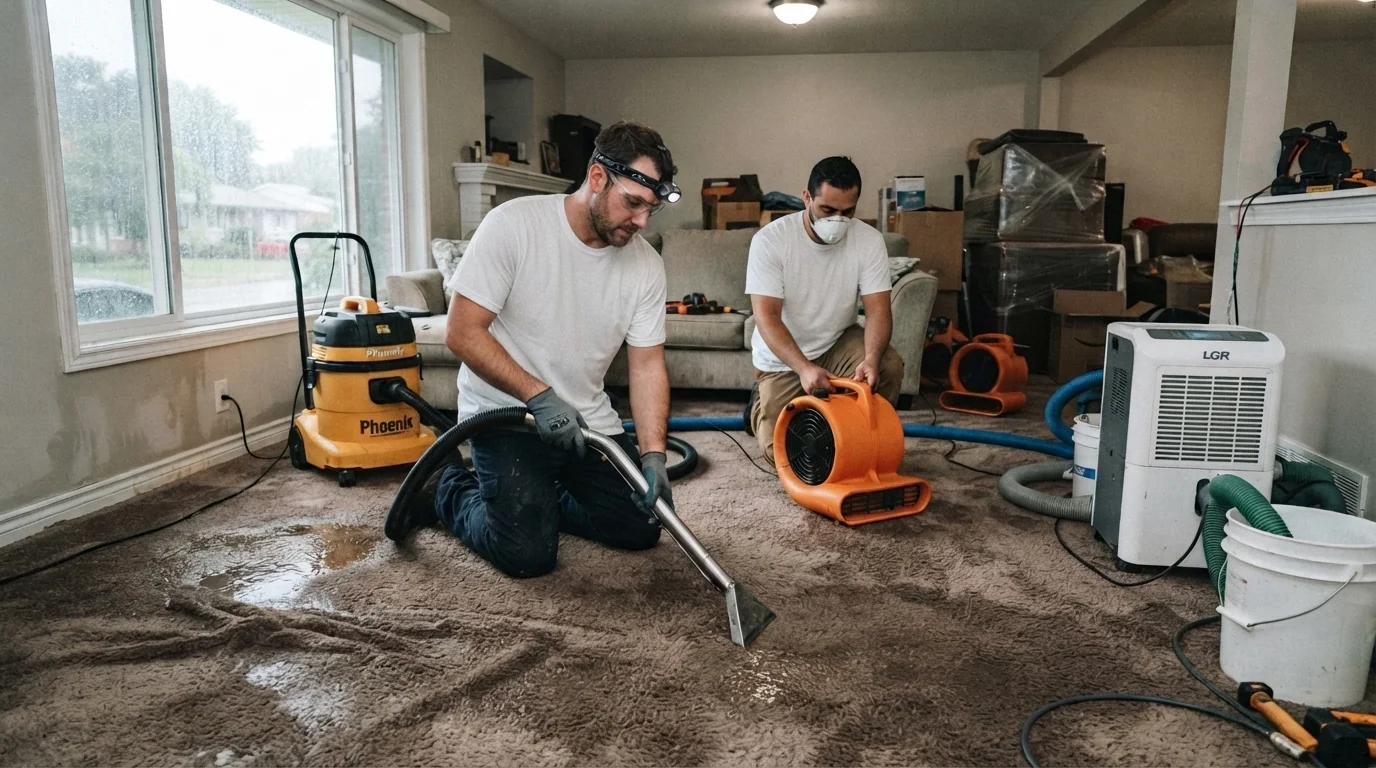
Axial and centrifugal air movers are positioned around the perimeter and across the surface of wet carpet to accelerate evaporation by moving large volumes of air close to the material. The specific placement pattern — often angled to create a circular airflow across the room — is calculated based on room size and saturation level rather than simply pointed in one direction. If you want to go deeper on this, our guide on Drying Under Vinyl and Laminate Flooring After Water Damage covers it well. We also break this down further in Extracting Water from Tile, Wood, and Carpet: Different Techniques for Different Floors in Phoenix.
Dehumidifiers
As air movers accelerate evaporation, the moisture released into the air needs to go somewhere — this is the role of dehumidifiers, which pull that moisture out of the room air. Without adequate dehumidification, evaporated moisture can simply redistribute onto other surfaces in the room rather than actually leaving the space. For background from an independent source, see the IICRC S500 restoration standard. the EPA's mold prevention guidance has useful guidance on this if you want to read further.
Specialized Sub-Surface Drying Tools
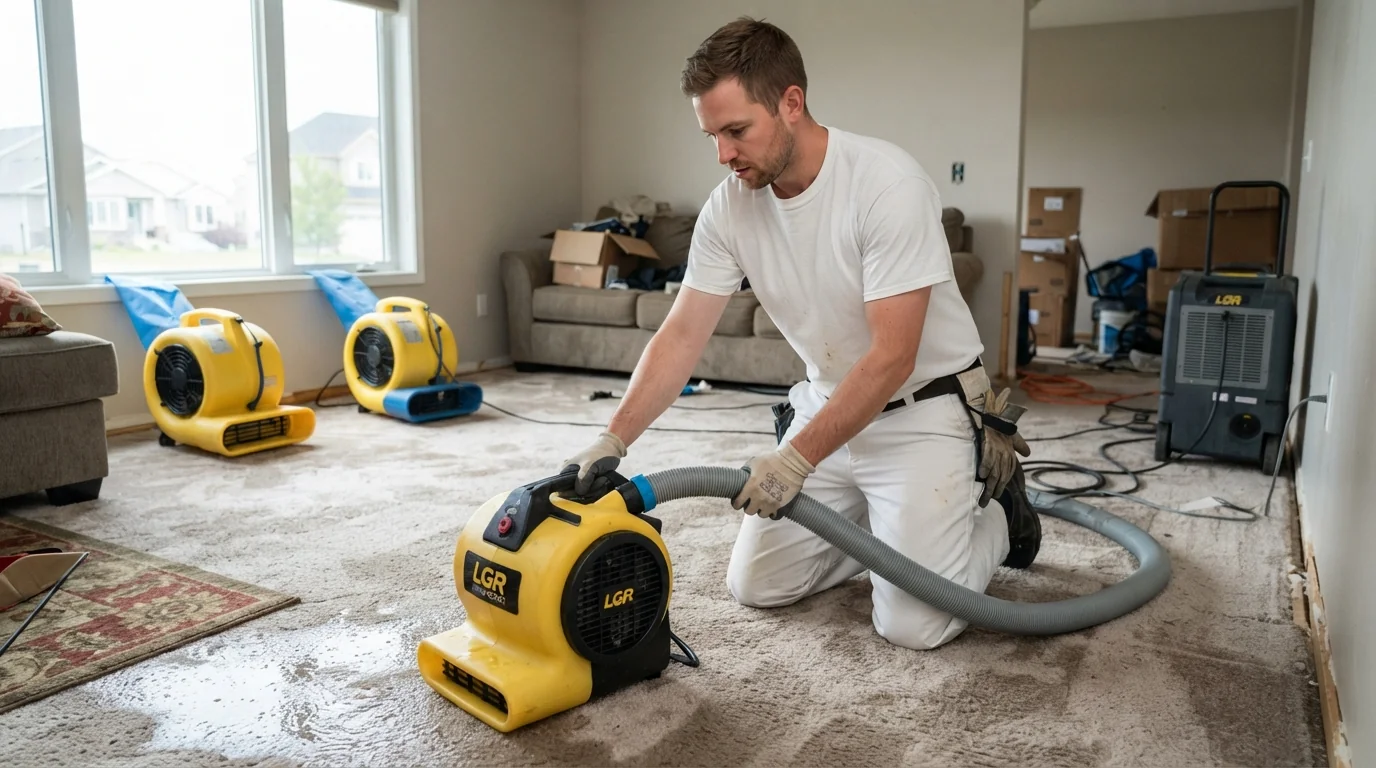
For situations where water has reached beneath the carpet into the subfloor, specialized tools like weighted extraction wands or floor mat drying systems can pull moisture out from below rather than just addressing the surface. These tools are particularly useful for concrete subfloors common in Phoenix homes, which hold moisture differently than wood subfloors. You can also review the Department of Energy's guidance on humidity and ventilation for an outside perspective on this.