When a water damage event occurs, one of the first things a professional restoration technician will determine is the category of water involved. This classification is not arbitrary — it directly dictates what safety protocols are required, what materials can be saved versus what must be removed, how the site must be contained, and ultimately how much the restoration will cost.
Category 1: Clean Water — Source and Characteristics
Category 1 water originates from a sanitary source and poses no immediate health risk at the time of the loss. Common clean-water sources include supply line breaks from copper or PVC water lines, overflowing bathroom or kitchen sinks with no prior contamination, failed ice maker supply lines, and rain water entering through a freshly failed roof penetration in a clean attic space. This applies across the Phoenix-area neighborhoods we serve, not just one part of the city.
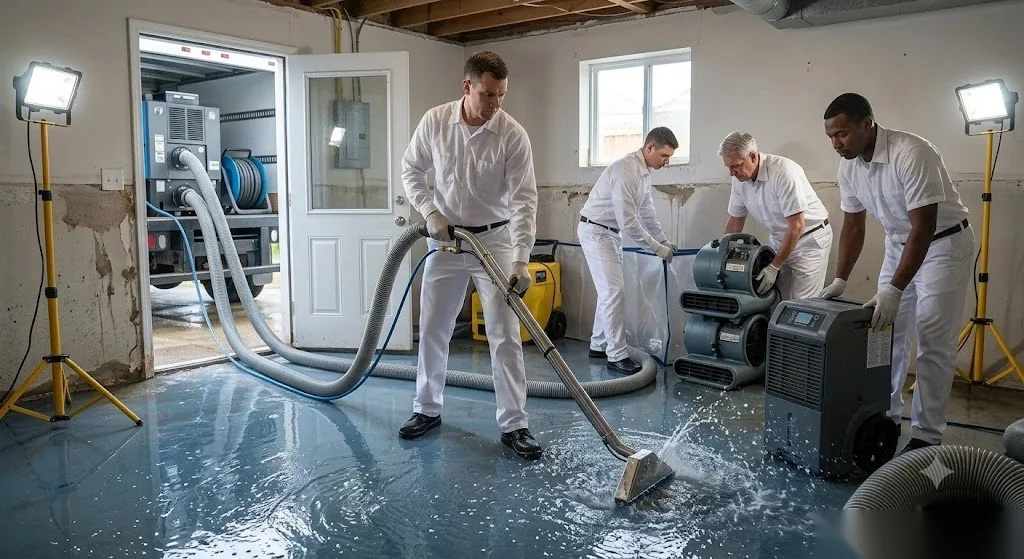
Category 1 events can be mitigated with standard extraction and drying protocols without the decontamination steps required for contaminated water. However, there is a critical time component: clean water in contact with building materials begins to support biological growth within 24–48 hours, at which point it should be reclassified as Category 2.
Insurance coverage for Category 1 events is generally the most straightforward. Most standard homeowners and commercial property policies cover sudden and accidental Category 1 losses from internal plumbing failures. the IICRC S500 standard sets the procedural benchmark restoration companies are expected to follow.
Category 2: Grey Water — Sources and Protocols
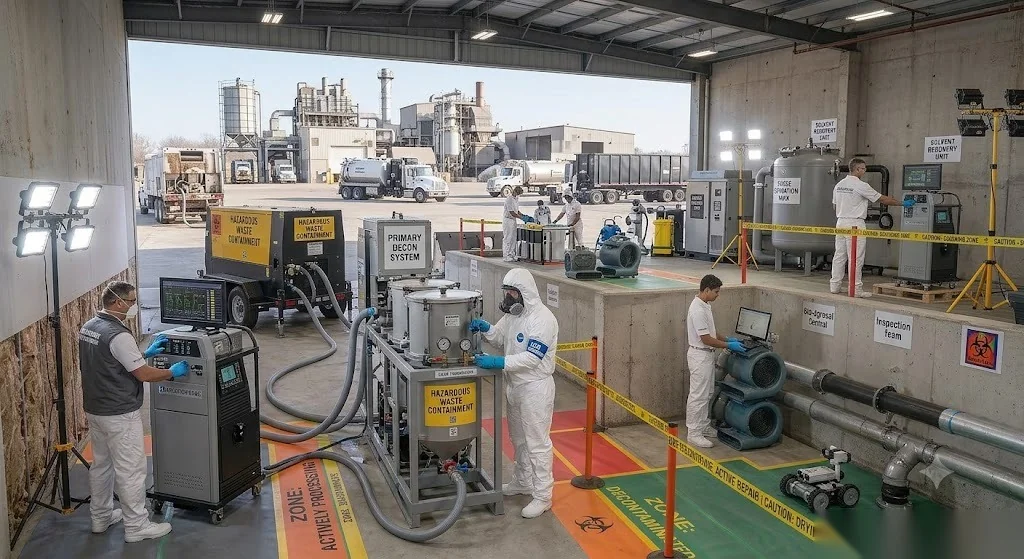
Category 2 water contains significant contamination from biological or chemical sources and poses a health risk if ingested or if contact occurs with broken skin or mucous membranes. The contamination is not at the level of a sewage event, but it is sufficient to require decontamination protocols beyond what clean water events need.
Restoration of Category 2 events requires EPA-registered disinfectants applied to all affected hard surfaces and structural elements after extraction. Porous materials that cannot be effectively cleaned and disinfected — carpet padding, contaminated insulation, severely saturated drywall — typically must be removed rather than dried in place. You can learn more about our Phoenix water damage restoration company and how we help Phoenix homeowners recover quickly.
Insurance coverage for Category 2 events is generally similar to Category 1 under standard homeowners policies, as long as the source is an internal plumbing or appliance failure. The restoration cost is higher due to decontamination requirements and greater material removal, but the coverage framework is typically the same.
Category 3: Black Water — Biohazard Protocols and Health Risks
Category 3 water is grossly contaminated and contains pathogens, sewage, bacteria, parasites, and potentially toxic agents that pose serious health risks from contact or inhalation. This is the highest-risk classification, and it requires the most comprehensive restoration protocols. the EPA provides background on how moisture control prevents mold growth in buildings.
Category 3 restoration requires full biohazard protocols throughout the affected area. All technicians working in the containment zone wear full PPE: Tyvek suits, N95 or higher respiratory protection, face shields, and impermeable gloves and boot covers.
Hard, non-porous surfaces are cleaned, then disinfected with EPA-registered biocides applied at the correct concentration and allowed to remain at adequate dwell time to achieve full pathogen elimination. Following disinfection, antimicrobial agents are applied for residual protection. If you want to go deeper on this, our guide on How to Read Your Water Damage Restoration Report covers it well.
How Water Category Affects Insurance Coverage
The water category significantly affects both the documentation requirements and the claims process for your insurance. Category 1 events have the simplest documentation requirements and the most straightforward coverage path under standard homeowners policies. FEMA's National Flood Insurance Program explains how the National Flood Insurance Program covers flood losses.
Sewage backup events — among the most common Category 3 losses in Phoenix — are frequently excluded from standard homeowners policies. Many homeowners are surprised to learn that their standard policy does not cover a sewage backup from a municipal line, even though they pay premiums for water damage coverage.
For all water categories, the restoration company's documentation package is critical to a successful claim. This includes the moisture map establishing pre-mitigation conditions, daily drying logs confirming the drying program and progress, photographs of all affected materials pre- and post-mitigation, and an itemized scope of work in adjuster-compatible format.