Garages present a distinct scenario when it comes to roof leak water damage, differing from living-space leaks in structure, contents at risk, and often in how quickly the damage is even noticed. Understanding these differences helps Phoenix homeowners respond appropriately when a roof leak affects a garage space. This applies across the Phoenix-area neighborhoods we serve, not just one part of the city.
Why Garage Roof Leaks Often Go Unnoticed Longer
Garages are typically unfinished or minimally finished spaces — often without drywall ceilings, without regular daily occupancy, and frequently used for storage rather than living. This combination means a roof leak into a garage can persist far longer before being discovered compared to a leak into an occupied living room or bedroom, where staining or dripping would be noticed almost immediately. You can learn more about our Phoenix water damage restoration company and how we help Phoenix homeowners recover quickly.
Structural Considerations Specific to Garages
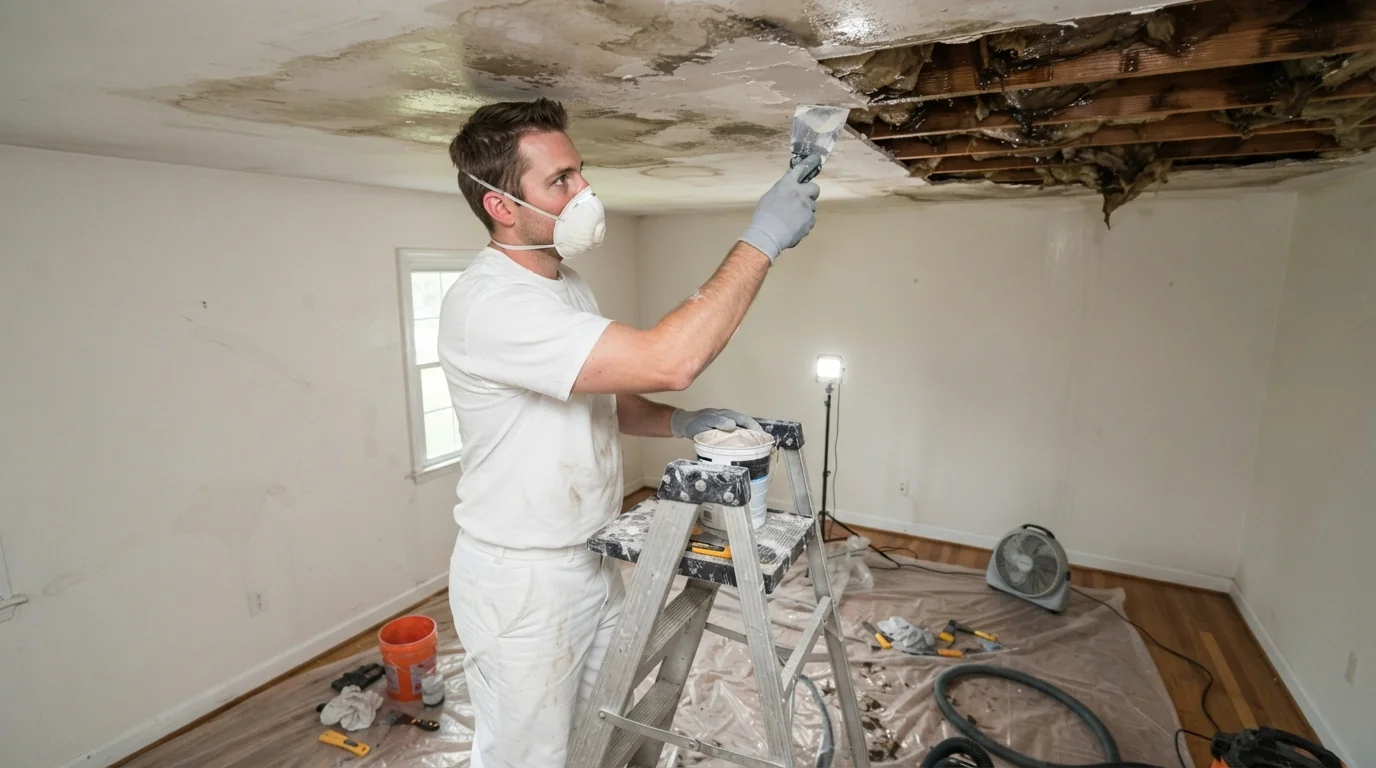
Many Phoenix garages have exposed roof trusses or rafters without a finished ceiling, meaning water intrusion is sometimes visible directly on the structural framing rather than being hidden behind drywall — which can actually make the leak point easier to identify, since there's no ceiling material obscuring the moisture pathway. However, garages also frequently house electrical panels, garage door openers, and other electrical equipment that require the same safety precautions as any other electrical hazard from water exposure. If you want to go deeper on this, our guide on Why Skylights Are a Common Roof Leak Point in Phoenix Homes covers it well.
Contents at Risk in a Garage Setting
Garages commonly store items with unique vulnerability to water damage: cardboard storage boxes, holiday decorations, tools susceptible to rust, and sometimes vehicles themselves if the leak is severe enough to create standing water on the garage floor. Unlike furniture or flooring in a living space, many garage-stored items have no practical restoration path once wet — cardboard boxes and their contents are often a total loss, making prompt response important to limit what needs replacement. For background from an independent source, see the EPA's guidance on moisture and mold.
Concrete Slab and Drainage Considerations
Garage floors are typically bare concrete slabs, which handle water differently than carpeted or wood-floored living spaces. Water on a garage slab needs to be extracted and the slab thoroughly dried, since concrete can retain moisture within its pore structure even after the surface appears dry, potentially affecting anything stored directly on the slab afterward if drying is incomplete. the IICRC S500 restoration standard has useful guidance on this if you want to read further.
Assessment and Repair Approach
Because garage roof structures are frequently exposed, technicians can often directly assess framing moisture content without needing to remove drywall first — a practical advantage compared to living-space leaks. The roof repair itself follows the same protocols as any other roof leak, with the interior scope focused on drying framing, replacing any affected insulation, and addressing water-damaged contents stored in the space. You can also review the Insurance Information Institute's claims overview for an outside perspective on this.