Why Kitchen Flooring Assessment Starts With Material Type
Kitchen water damage repair approaches flooring differently depending on what the floor is made of, since tile, vinyl, laminate, and hardwood all respond to water very differently. Tile itself is largely water-resistant, but the grout lines and the subfloor beneath the tile are where problems typically develop, while vinyl and laminate flooring have their own distinct vulnerabilities. It's worth browsing our full list of restoration services to see which one matches what you're dealing with. If cost is on your mind, how our pricing works breaks down what typically drives the number up or down.
Tile Flooring After Water Damage
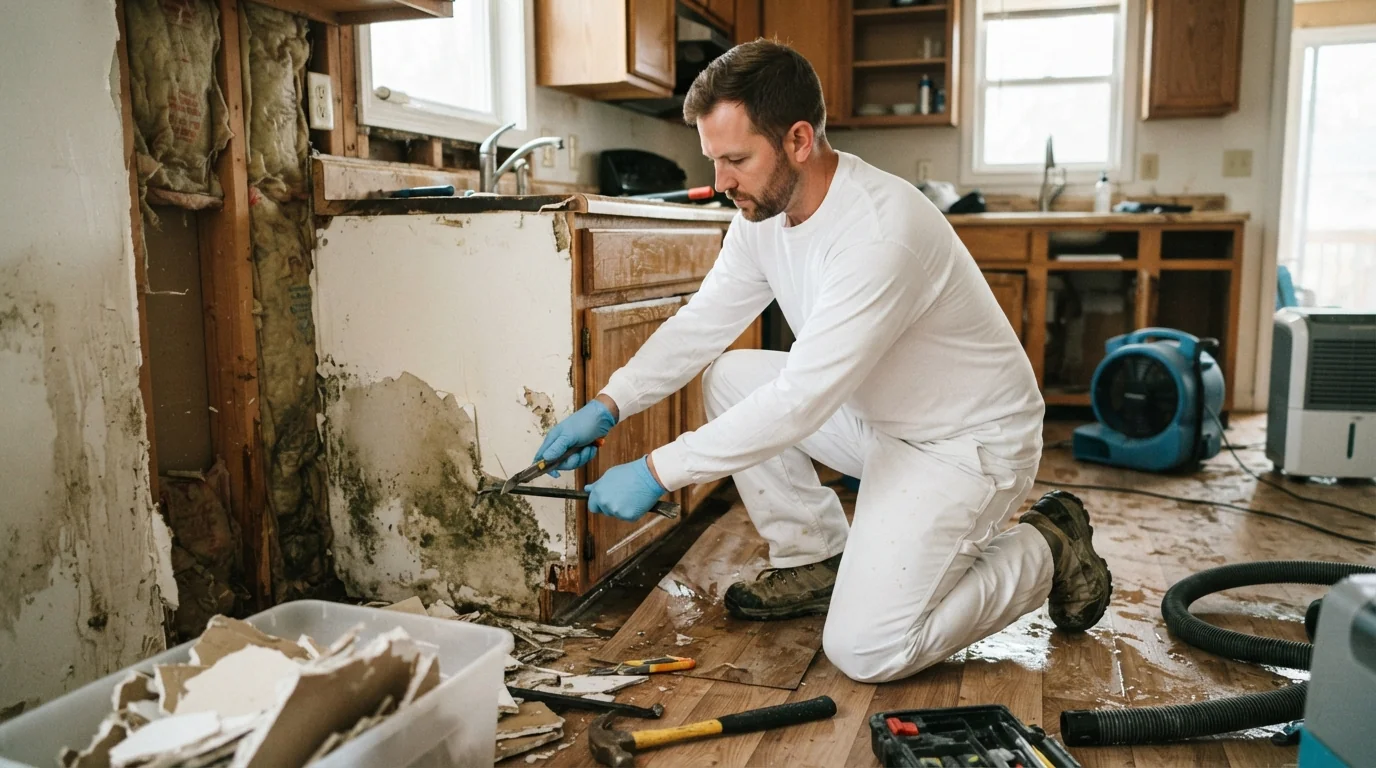
Ceramic and porcelain tile generally survive water exposure well, but water that seeps through grout lines can reach the subfloor and, in a mortar-set installation, can compromise the bond between tile and substrate over time. Assessing tile floors after a leak typically involves checking for loose or hollow-sounding tiles, which can indicate the substrate beneath has been compromised even though the tile surface looks fine. If you want to go deeper on this, our guide on Flood Damage Repair for Hardwood Floors in Phoenix Homes covers it well. We also break this down further in How Long Does Carpet Drying Take After Water Damage?.
Vinyl and Laminate Flooring
Sheet vinyl can sometimes be lifted, dried underneath, and reinstalled if the water exposure was brief, but vinyl plank flooring with a particleboard or fiberboard core generally cannot be saved once water reaches the core layer. Laminate flooring behaves similarly to vinyl plank — its core material typically swells permanently once wet, making replacement the more common outcome for laminate exposed to standing water. For background from an independent source, see the IICRC S500 restoration standard. the EPA's mold prevention guidance has useful guidance on this if you want to read further.
Hardwood Kitchen Flooring
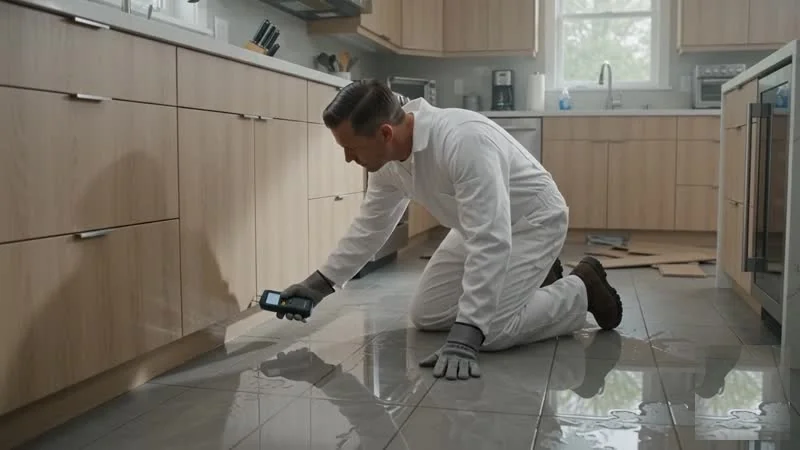
Hardwood in a kitchen faces more frequent water exposure risk than in other rooms, given the proximity to sinks, dishwashers, and refrigerators. See our detailed guide on hardwood floor drying for the specific process involved, which applies to kitchen hardwood just as it does elsewhere in a Phoenix home. You can also review the Department of Energy's guidance on humidity and ventilation for an outside perspective on this.