Dehumidification is half of every structural drying plan, and the type of unit used has a direct effect on how quickly a drying chamber reaches target humidity.
Refrigerant Dehumidifiers: The Everyday Workhorse
Refrigerant dehumidifiers pull air across a cold coil, condensing moisture out as the air cools below its dew point. They perform well in warmer, more humid conditions, which makes them a common choice for standard residential drying in moderate ambient conditions. If cost is on your mind, how our pricing works breaks down what typically drives the number up or down.
Low Grain Refrigerant (LGR) Units
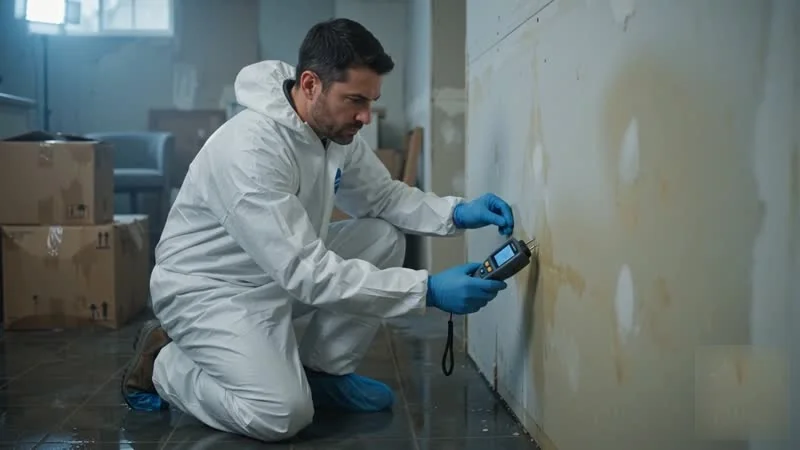
LGR dehumidifiers add a secondary cooling stage that lets them continue extracting moisture effectively even as the air in the drying chamber becomes progressively drier — something standard refrigerant units struggle with. Because Phoenix's climate often starts with low ambient humidity to begin with, LGR units are frequently the default choice for reaching aggressive target moisture levels efficiently. We've answered a lot of related questions on answers to common questions.
Desiccant Dehumidifiers for Cold or Deep-Set Moisture
Desiccant units use a chemical drying agent instead of refrigeration, which lets them perform in colder conditions where refrigerant units lose efficiency — relevant for crawl spaces or unconditioned areas. They're also commonly used for specialty applications like wall cavity drying through ducted hoses, where moisture needs to be pulled from deep inside a structural assembly. For background from an independent source, see the IICRC S500 restoration standard.
How Crews Decide Which Type to Deploy
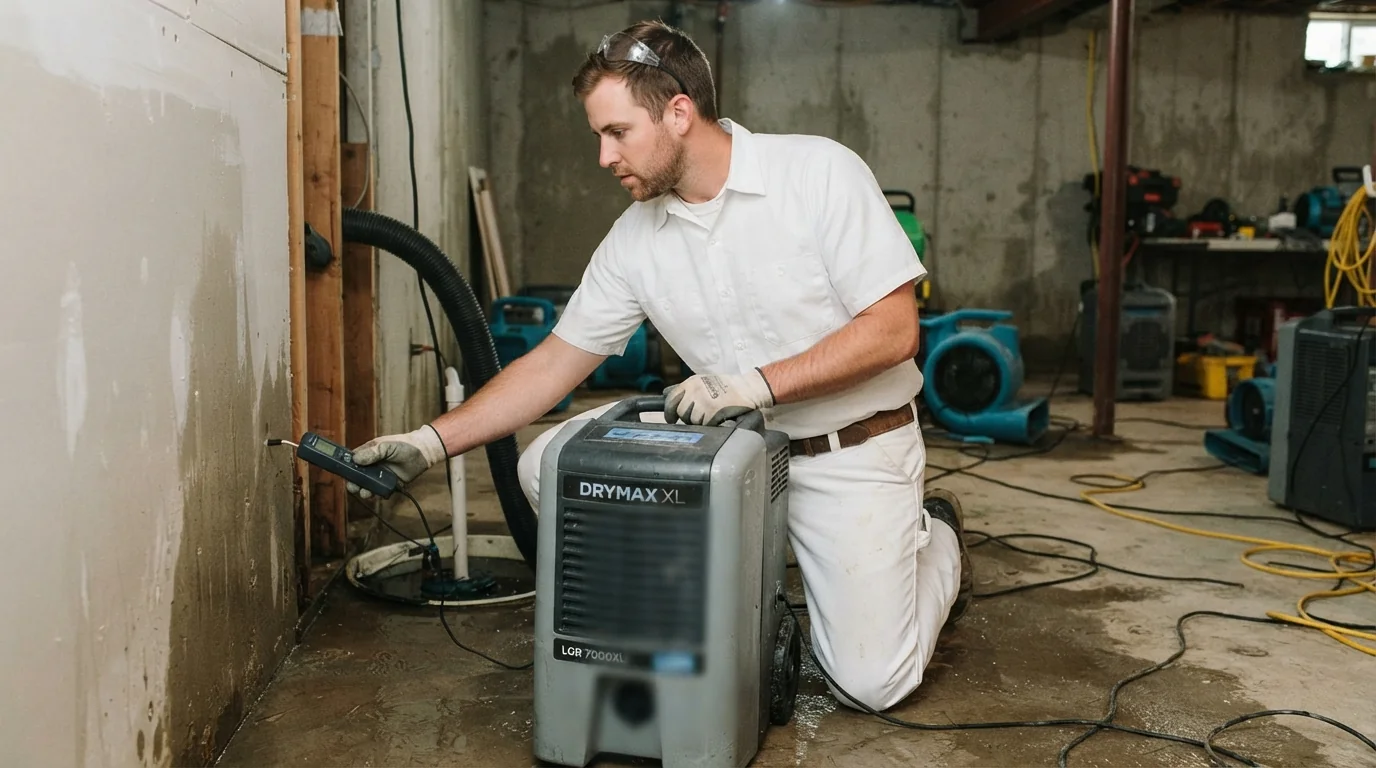
The decision comes down to the temperature and starting humidity of the drying chamber, the materials involved, and whether the space is conditioned or not. It's common for a single job to use a combination — LGR units in the main living space and a desiccant unit ducted into a crawl space or wall cavity simultaneously. the EPA's moisture control guidance has useful guidance on this if you want to read further.
Sizing Dehumidification Capacity to the Job
Dehumidifier capacity is measured in pints of water removed per day and is calculated against the cubic footage of the drying chamber and the class of water damage, similar to how air mover count is calculated. Under-sizing dehumidification capacity is one of the most common reasons a drying program stalls despite adequate airflow. You can also review the Department of Energy's ventilation and humidity guidance for an outside perspective on this.