When water is flooding your Phoenix property, you are making one of the most consequential contractor decisions of your homeownership under conditions of extreme stress and time pressure. The wrong company can leave hidden moisture that leads to mold, submit a claim scope that your insurance carrier disputes, or disappear after the initial extraction leaving a half-dried structure.
The Most Important Filter: Genuine 24/7 Response
The single most important quality check for a water damage restoration company is whether a live human being answers their phone at 2 a.m. on a Sunday and whether crews genuinely dispatch within the hour. This is not a guarantee most companies can actually make — many use answering services that take a message and promise a callback the next morning. This applies across the Phoenix-area neighborhoods we serve, not just one part of the city.
When you call a restoration company during an emergency, ask directly: 'Is this your dispatch line or an answering service?' and 'How long before a crew can be on-site at my Phoenix address?' A legitimate emergency response operation will give you a specific time estimate, not 'we'll try to get there as soon as possible.' If the person answering cannot tell you the name of the crew being dispatched or the estimated arrival time within a few minutes of your call, that is a significant warning sign.
For business owners, ask whether the company has experience with commercial properties and whether they can stage crews for multi-shift overnight work to minimize business interruption. Commercial water damage events require different crew sizing, equipment volume, and scheduling coordination than residential jobs. the IICRC S500 standard sets the procedural benchmark restoration companies are expected to follow.
Verify Technical Credentials and Standard Compliance
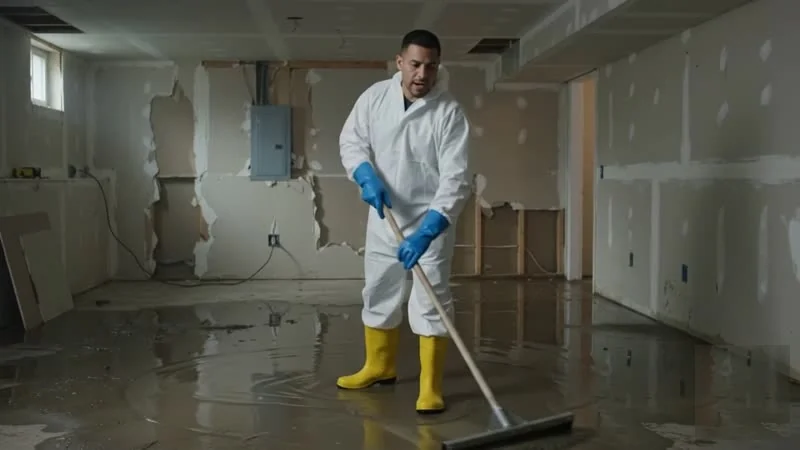
The Institute of Inspection Cleaning and Restoration Certification (IICRC) publishes the S500 Standard and Reference Guide for Professional Water Damage Restoration — the industry's most widely adopted technical protocol. Ask any restoration company you consider whether their technicians follow IICRC S500 standards for drying calculations, moisture monitoring, and documentation.
Beyond S500 compliance, ask whether the company has technicians certified as Water Restoration Technicians (WRT) through the IICRC. This certification requires coursework and examination in water damage science, drying technology, and restoration documentation. You can learn more about our Phoenix water damage restoration company and how we help Phoenix homeowners recover quickly.
For contamination events — sewage backup, Category 3 floodwater, any water involving biological contamination — ask specifically about the company's biohazard protocols. Category 3 events require EPA-registered disinfectants applied at appropriate dwell times, full PPE for all technicians in the containment zone, and regulated disposal of contaminated materials.
Understand the Documentation and Insurance Process
Your restoration company's documentation package is the foundation of your insurance claim. A properly documented water damage job includes: a moisture map showing all measurement points and readings before, during, and after drying; daily drying logs with consistent readings at each measurement point; photographs of pre-mitigation conditions, equipment placement, and post-drying conditions; an itemized scope of work with line items that correspond to industry-standard databases used by insurance adjusters (Xactimate or equivalent); and a final moisture clearance document confirming all materials have reached acceptable levels. the EPA provides background on how moisture control prevents mold growth in buildings.
Ask potential companies whether they use Xactimate or a similar adjuster-compatible pricing platform for their scope of work. Restoration invoices that use proprietary pricing or non-standard line items create friction with insurance adjusters and can slow or reduce your claim payment.
Be cautious of any company that asks you to sign an Assignment of Benefits (AOB) document before starting work, or that pressures you to sign quickly without explaining what it means. An AOB transfers your insurance claim rights to the contractor, allowing them to pursue payment directly from your insurer. If you want to go deeper on this, our guide on Preparing a Phoenix Property for Sale After Water Damage covers it well.
Red Flags That Signal Problems
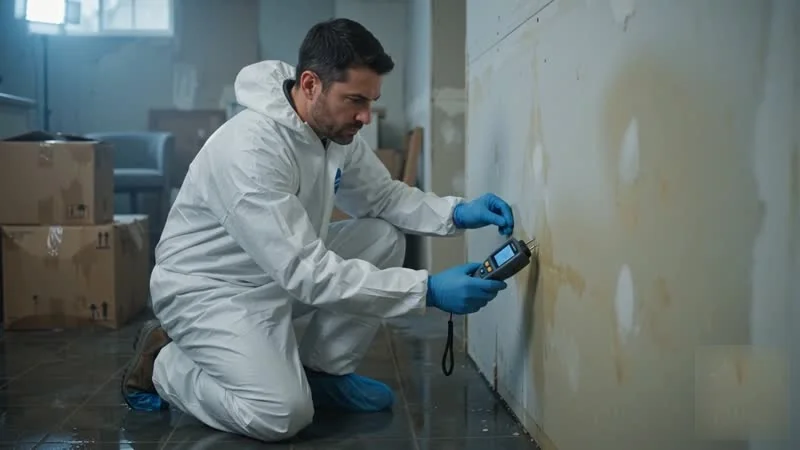
Several specific behaviors should lead you to choose a different restoration company. First: any company that provides a final price estimate before performing an on-site moisture assessment. FEMA's National Flood Insurance Program explains how the National Flood Insurance Program covers flood losses.
Third: companies that remove drying equipment before moisture readings confirm target levels have been achieved across all measurement points. Equipment that is pulled too early leaves residual moisture in structural assemblies that eventually leads to mold or material failure — and by the time it is discovered, the restoration company is long gone.
Fifth and perhaps most importantly: companies that offer to waive your insurance deductible. This is insurance fraud in Arizona — a deductible waiver means the contractor is inflating the claim to cover the deductible amount, which constitutes misrepresentation to your insurer.