Ceiling water damage is one of the most visually alarming forms of property damage, and for good reason: a ceiling that has absorbed significant water weight can fail suddenly, dropping gallons of water and debris without warning. The visible signs of ceiling damage — staining, soft spots, bubbling paint, or active dripping — are also reliable indicators that a hidden water source has been active above the ceiling for some period.
Assessing Ceiling Damage Severity
Ceiling damage presents along a severity spectrum. At the least severe end: light brownish staining with no soft spots or active dripping indicates that moisture entered the ceiling assembly at some point and evaporated. We've answered a lot of related questions on answers to common questions.
At the severe end: a visibly bulging or sagging ceiling section is an emergency. Saturated standard 5/8-inch gypsum drywall can hold the weight of dozens of gallons of water — that weight, distributed over the fastener points, will pull the ceiling from the joists without warning.
Ceiling damage location provides clues about the source. Staining directly below an HVAC air handler points to condensate overflow — the leading single cause of Phoenix ceiling water damage. the IICRC S500 standard sets the procedural benchmark restoration companies are expected to follow.
What Is Happening Inside the Ceiling
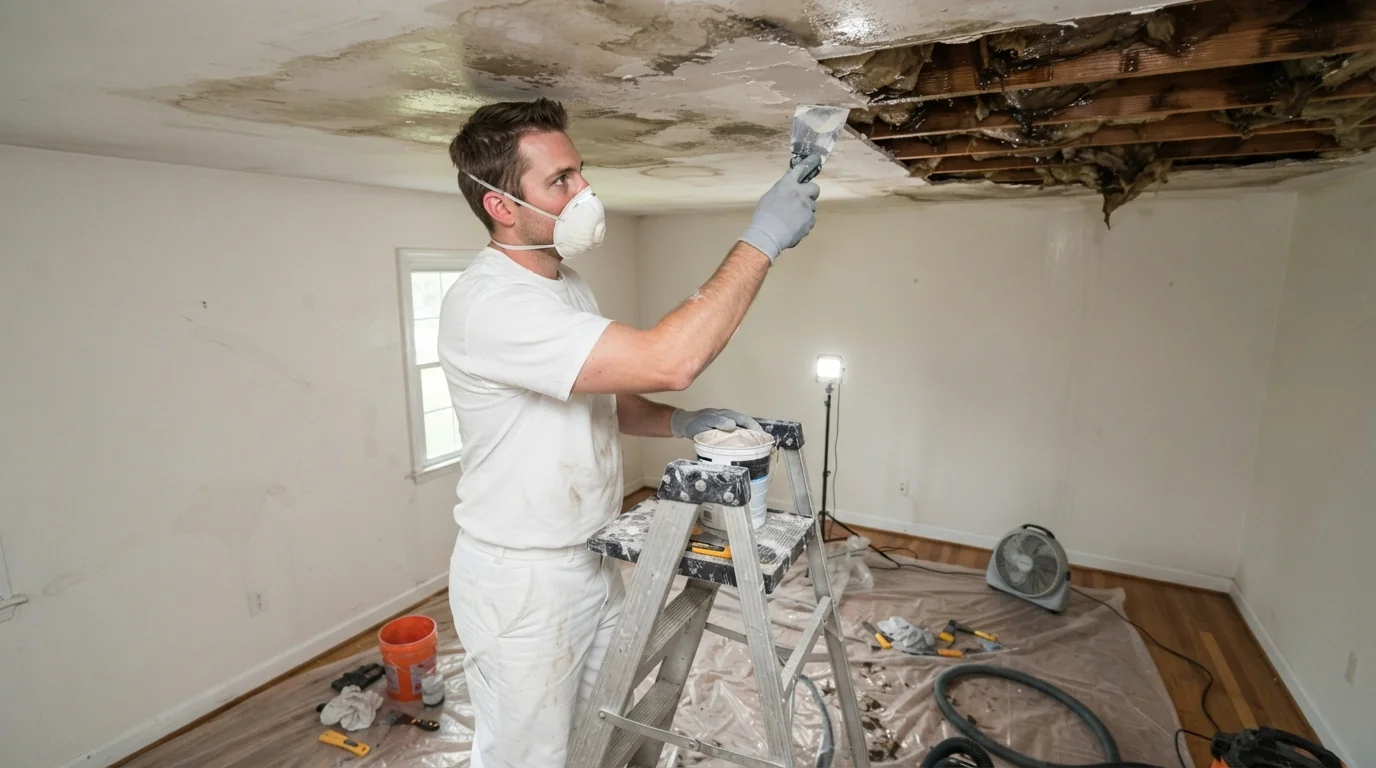
Water that enters the ceiling assembly travels laterally through insulation before dripping through drywall. The visible stain appears where accumulated water finally penetrates the paper face — which may be feet away from where water actually entered the assembly.
Fiberglass batt insulation absorbs water and holds it against the ceiling drywall, creating a moisture reservoir that continues to wet the drywall surface long after the original source is controlled. Blown-in insulation similarly absorbs and retains water. This applies across the Phoenix-area neighborhoods we serve, not just one part of the city.
Framing lumber above the ceiling that has been wet must be dried to pre-loss moisture levels before reconstruction. Wet framing enclosed behind new drywall continues to support biological growth, eventually causing recurring staining and deterioration of the new ceiling surface.
Professional Ceiling Restoration Process
The restoration process starts with moisture mapping of the full ceiling assembly — not just the visibly affected area. Thermal imaging from below reveals the extent of moisture migration within the insulation layer, and pin meters confirm moisture content at the drywall face and framing above where accessible. the EPA provides background on how moisture control prevents mold growth in buildings.
Saturated ceiling drywall is typically removed — it cannot be effectively dried in place once fully saturated, because the gypsum core has lost structural integrity and the paper face may have separated. Removal scope extends to the dry edges of the moisture map, not just the visual stain boundary.
After drywall and insulation removal, the framing joists are assessed with moisture meters and dried under structural drying equipment positioned in the open ceiling cavity. Daily monitoring confirms when framing reaches target levels. If you want to go deeper on this, our guide on Why Skylights Are a Common Roof Leak Point in Phoenix Homes covers it well.
Source Identification and Preventing Recurrence
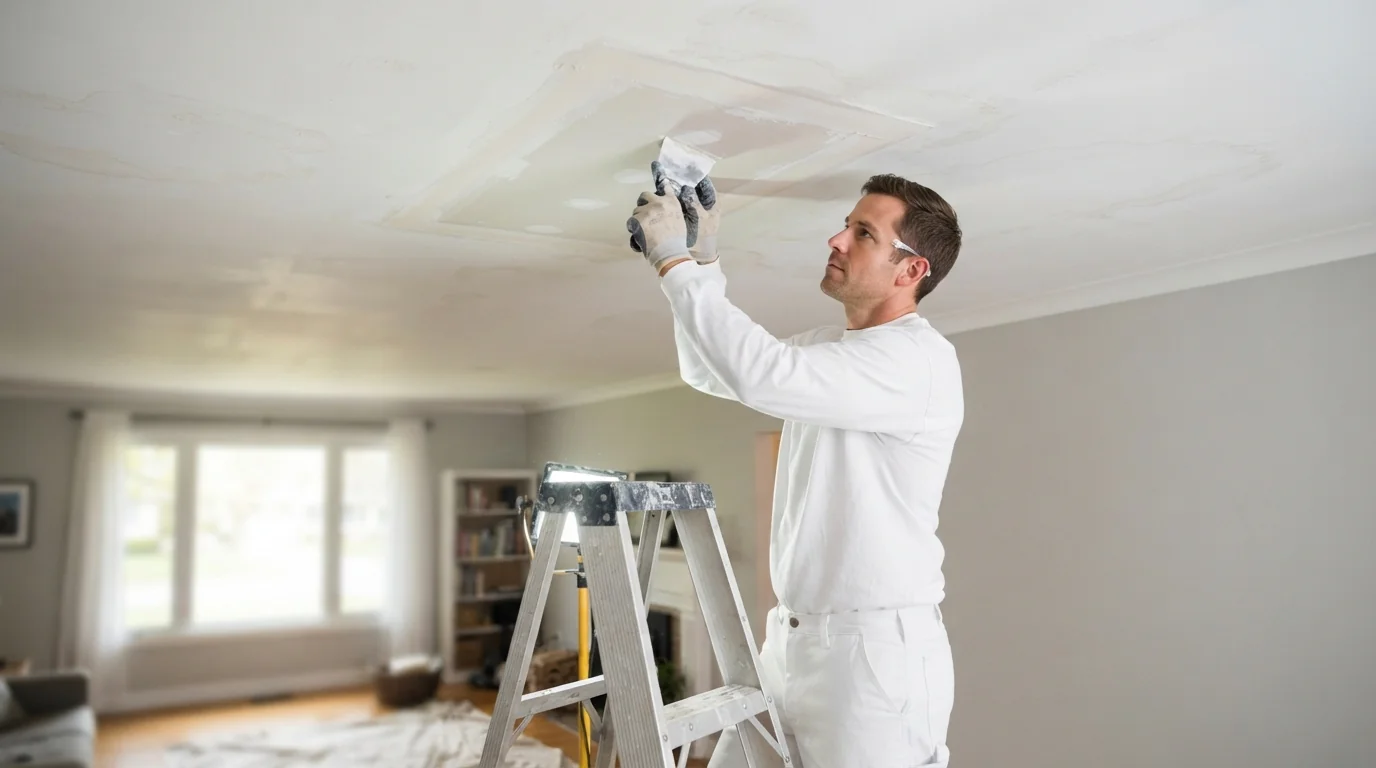
The most important step after ceiling restoration is permanently repairing the source. A restored ceiling that has an unremediated water source above it will stain again — often within one to two monsoon seasons if the source is roof-related. FEMA's National Flood Insurance Program explains how the National Flood Insurance Program covers flood losses.
For ceiling damage from HVAC condensate overflow — the most common single source — verify the drain line is clear, secondary overflow protection is functional, and the drain pan is in good condition. Install a secondary float switch if the air handler lacks one.
For roof-source ceiling damage, a post-repair inspection by the roofing contractor after the first monsoon storm confirms the repair holds under actual rainfall conditions. If roof repairs are completed during the dry season, this confirmation test may not occur until monsoon season.