Cabinetry sits at the intersection of aesthetics and structure, and decisions about structural drying around cabinets often come down to the specific construction material involved, not a blanket rule.
Toe-Kick Areas: The First Place Water Collects
The toe-kick — the recessed space at the base of cabinets — is usually the first place water pools during a kitchen leak, whether from an ice maker supply line, dishwasher, or sink. Technicians often remove the toe-kick panel early in the assessment process, since it provides direct access to check the cabinet base and the flooring beneath without disassembling the entire cabinet run. This applies across the Phoenix-area neighborhoods we serve, not just one part of the city.
Particleboard vs. Plywood Cabinet Construction
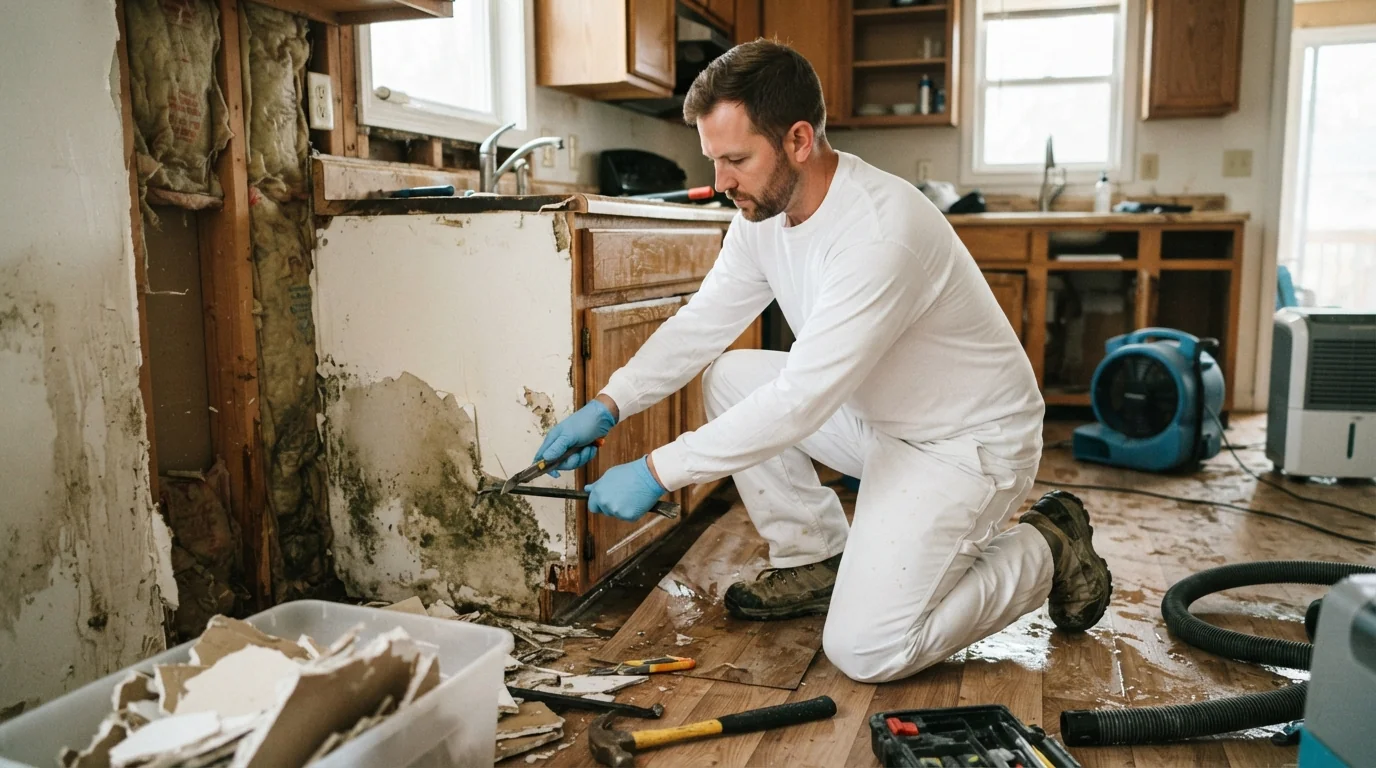
Cabinet boxes built from particleboard swell and lose structural integrity quickly once saturated, and particleboard that has visibly swollen generally cannot be effectively dried back to its original shape — it typically requires replacement. Plywood cabinet boxes are considerably more water-resistant and can frequently be dried in place if caught before extended saturation. For background from an independent source, see the IICRC S500 restoration standard.
Drying Cabinets in Place
For plywood construction with limited exposure, technicians may direct targeted airflow into the cabinet interior, sometimes removing lower shelving or drawers temporarily to improve air circulation and speed evaporation. Cabinet doors are often left open throughout the drying program to allow the interior to dry alongside the surrounding room. the EPA's moisture control guidance has useful guidance on this if you want to read further.
When Replacement Is the Right Call
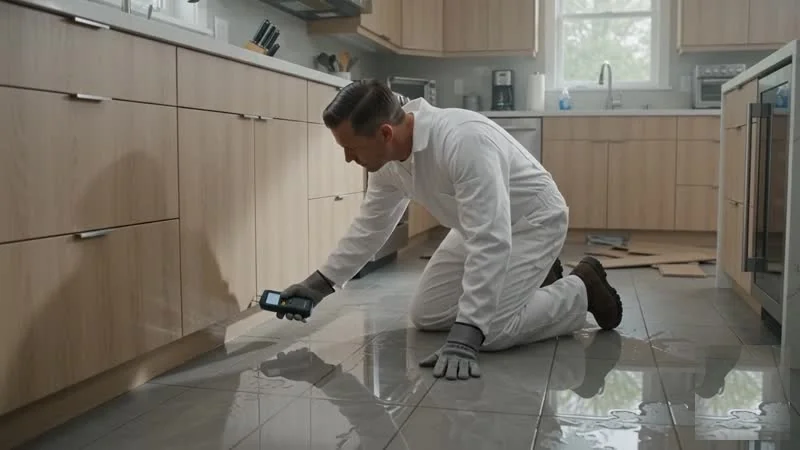
Swollen particleboard, delaminating veneer, or cabinets that were saturated for an extended period before discovery are generally better candidates for replacement than drying, since attempting to dry compromised material rarely restores its original strength or appearance. This decision is similar in principle to the drywall and plaster comparison covered in our material-specific drying guide. You can also review the Department of Energy's ventilation and humidity guidance for an outside perspective on this.
Documenting Cabinet Damage for Insurance
Because cabinet replacement can be a significant cost, clear photo documentation of the cabinet material, extent of swelling or delamination, and the duration of exposure helps support your insurance claim — this is a good moment to review our documentation guide for what adjusters look for.