Insurance claims for water damage in Phoenix are won or lost on documentation quality. An adjuster who arrives at a professionally documented loss — with pre-mitigation photographs, a restoration company's moisture map, daily drying logs, and a complete personal property inventory — has everything needed to process the claim efficiently at full replacement value.
First-Hour Documentation: The Foundation of Your Claim
The moment you discover water damage and confirm there are no active electrical or safety hazards, documentation begins — before you move, clean, or remove anything. Record a continuous video walkthrough of every affected space, narrating as you go: the date and time of discovery, the water source and how you identified it, the depth of standing water if present, every room and area with visible water contact, and every piece of furniture or personal property affected. Read more about our team and certifications if you want to know who will be showing up at your door.
Follow the video with systematic still photography. Photograph every wall, floor, and ceiling surface in each affected room.
Do not throw away or remove any damaged materials before your adjuster visits. This includes the failed pipe fitting, damaged flooring samples, and affected personal property. the Insurance Information Institute breaks down what standard homeowners policies do and do not cover for water damage.
Restoration Company Documentation
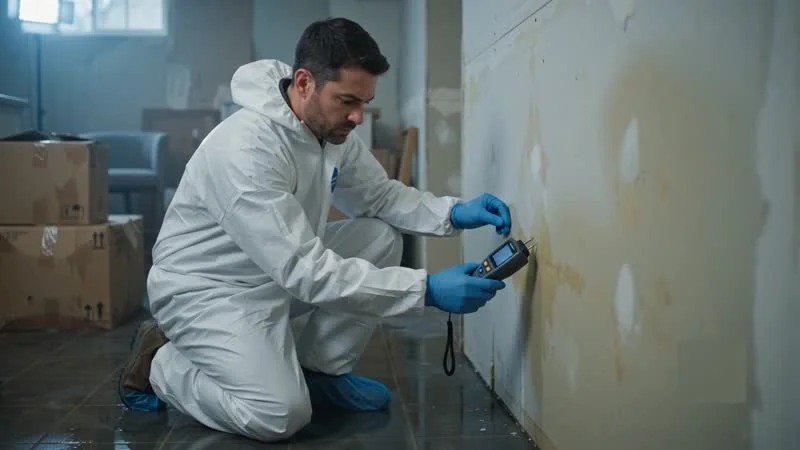
The documentation your restoration company generates is as important as your own initial documentation. A professionally documented restoration project includes: a formal moisture map with all measurement points and baseline readings; daily drying logs showing readings at each measurement point throughout the drying cycle; photographs of all affected materials, equipment placement, and completed work; an IICRC-compliant scope of work with itemized line items; and a final drying clearance document confirming target moisture levels were achieved.
Review these documents as they are generated — do not wait until the restoration is complete to request them. Ask for a copy of the initial moisture map immediately after the assessment, and request daily summaries of moisture readings during the drying program.
The restoration company's scope of work should be in a format consistent with what insurance adjusters use — line items that correspond to standard restoration pricing databases (Xactimate or similar). If your restoration company uses proprietary pricing that does not align with adjuster databases, there will be friction in the claims process.
Personal Property Inventory
A complete personal property inventory is the most time-intensive part of insurance documentation but also one of the most valuable for maximizing your claim. For every piece of damaged personal property, document: the item description, brand, model or style, purchase date (approximate is fine), original purchase price, current replacement cost (research a comparable current retail price), and the extent of damage. FEMA's National Flood Insurance Program explains how the National Flood Insurance Program covers flood losses. If a situation like this is happening right now, you can request emergency service and we'll get moving.
For electronics — computers, televisions, appliances — photograph the make, model, and serial number. For furniture, photograph any manufacturer or designer labels.
Your homeowners insurance typically covers personal property at either actual cash value (ACV) or replacement cost value (RCV) depending on your policy. ACV policies deduct for depreciation — a 10-year-old television is paid at what a used 10-year-old television is worth, not what a new equivalent costs.
Working With the Adjuster
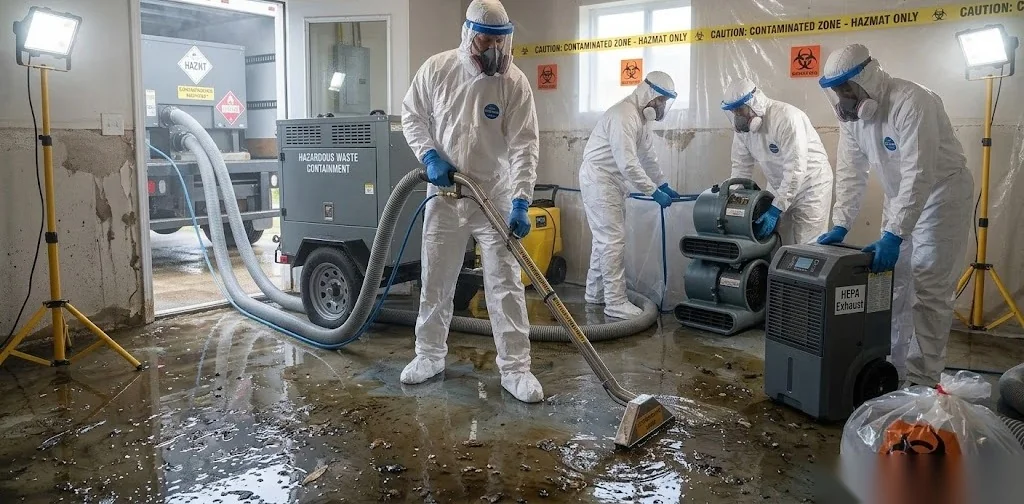
Your insurance adjuster may visit the property while mitigation is still in progress or after it is complete. Regardless of timing, the adjuster's scope inspection is a negotiable starting point, not a final determination. FloodSmart.gov has more detail on flood insurance coverage and eligibility.
Your restoration company should attend the adjuster inspection as your technical representative — they can point out specific scope items, explain why specific restoration actions are required, and provide the moisture mapping documentation that supports the extent of the claim. A restoration company with insurance claim experience is invaluable at this step.
Keep a complete file of all claim-related correspondence, documentation, and receipts from the day of loss forward. This file should include: your initial documentation (photos and video), restoration company documents (moisture map, drying logs, scope, clearance), adjuster correspondence, and any supplemental documentation filed.