Subfloor assemblies trap moisture in ways that are invisible from the room above, which is why structural drying plans often include specialized approaches specifically for what's under your feet.
Why Subfloors Are Hard to Dry
A subfloor sits beneath your visible flooring — tile, hardwood, laminate, or carpet — and is typically plywood or oriented strand board (OSB) attached to floor joists. Once water gets underneath the surface flooring, it's trapped between two barriers: the flooring material above and, in many cases, a vapor barrier or slab below, with very little natural airflow to help it evaporate. It's worth browsing our full list of restoration services to see which one matches what you're dealing with.
Tile and Stone Floors: The Trapped Water Problem
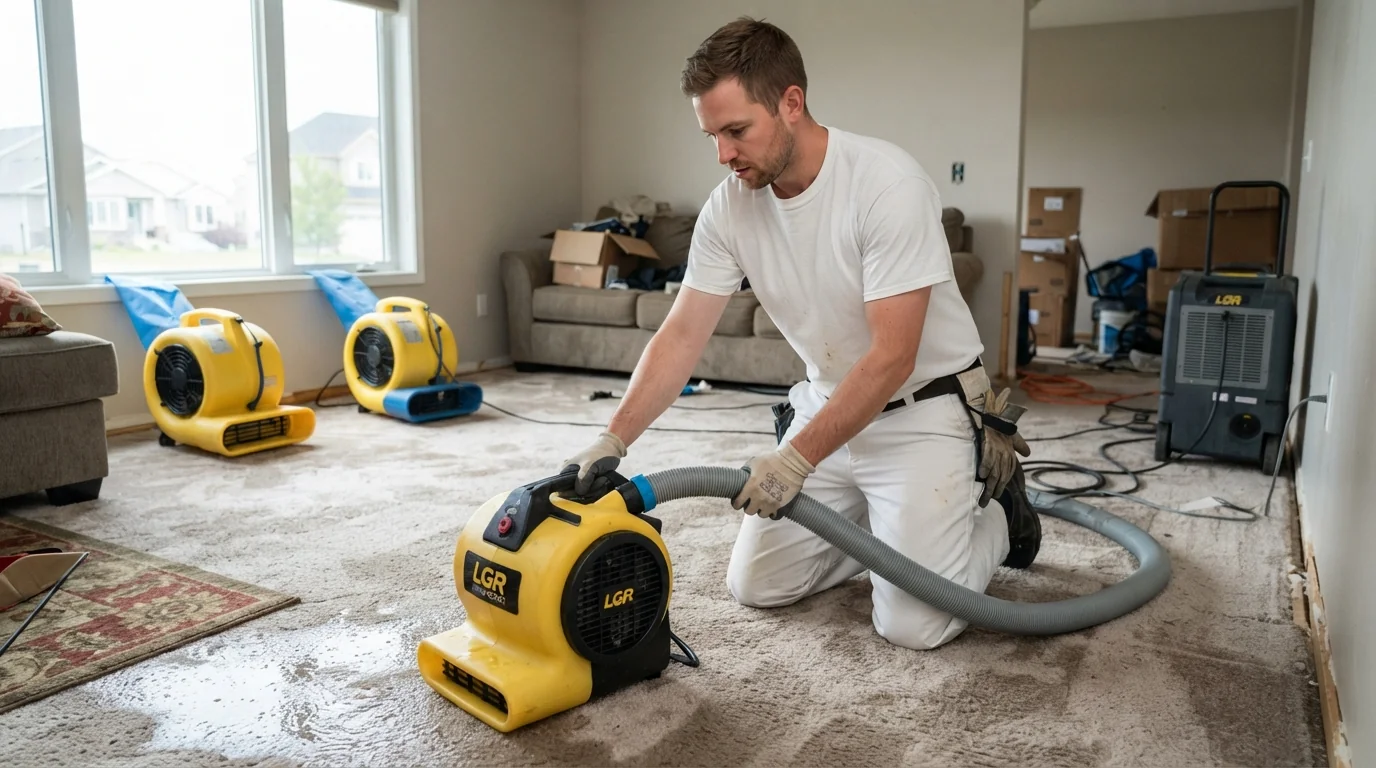
Tile and stone are essentially waterproof, which means once water gets under them through grout lines or edges, it has nowhere to go on its own. Restoration crews often use specialized drying mats that create negative pressure under the tile, pulling air — and moisture — out from beneath the surface without removing a single tile. If cost is on your mind, how our pricing works breaks down what typically drives the number up or down.
Hardwood Floor Drying: A Race Against Cupping
Hardwood responds to trapped subfloor moisture by cupping — the edges of each board curling upward as they absorb more moisture than their centers. Specialized hardwood drying systems use targeted mats and negative pressure to pull moisture from both the wood flooring and the subfloor beneath it simultaneously, often saving floors that would otherwise need full replacement. For background from an independent source, see the IICRC S500 restoration standard.
When Flooring Has to Come Up
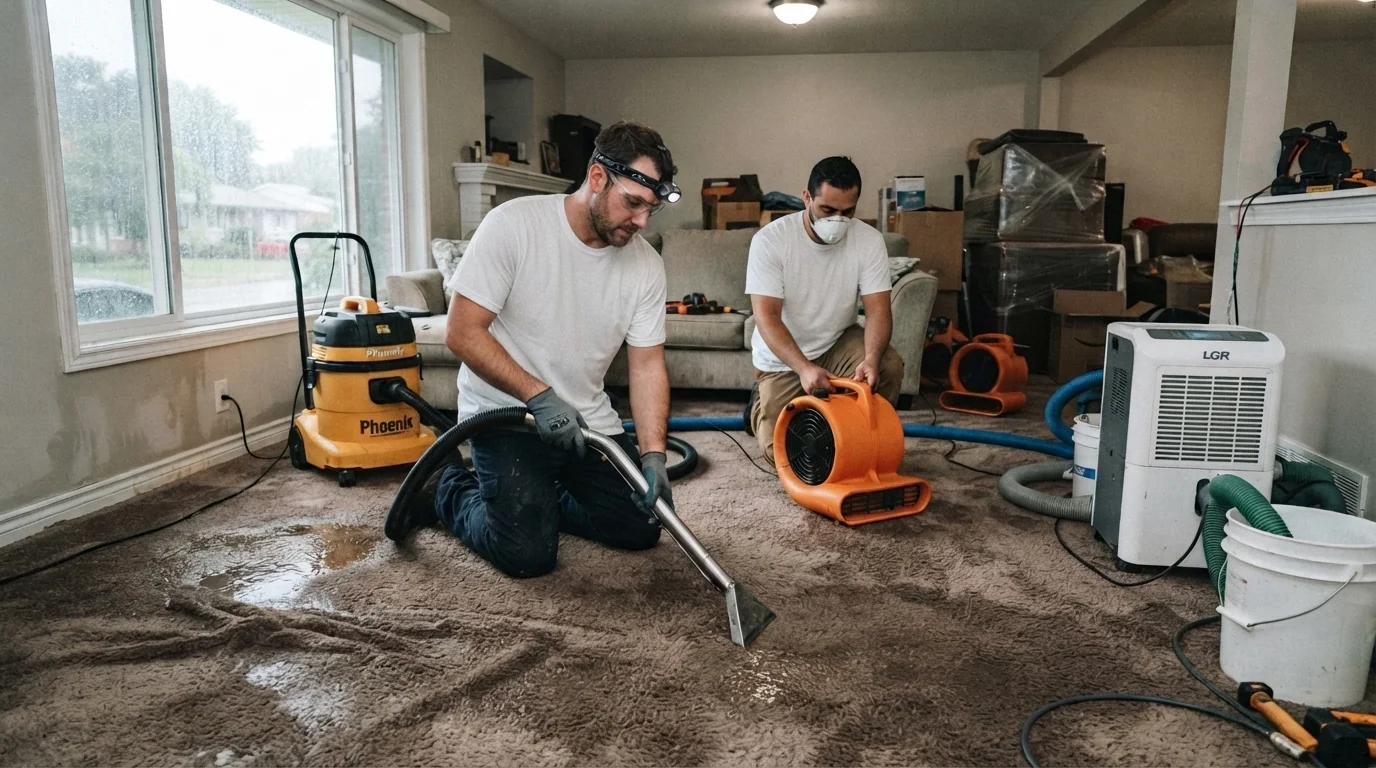
Some materials — laminate with a fiberboard core, carpet pad, or engineered wood with damaged veneer — often can't be dried in place and have to be removed to access the subfloor directly. This isn't always a bad outcome: removing flooring frequently speeds up the overall drying timeline compared to trying to dry through an intact but waterlogged surface material. the EPA's mold prevention guidance has useful guidance on this if you want to read further.
Confirming the Subfloor Is Actually Dry
Surface flooring can read dry on a moisture meter while the subfloor beneath it is still saturated, which is why technicians take penetrating moisture readings at the subfloor level, not just the surface. A drying program isn't complete until both layers meet their target moisture content, and your final restoration report should document both. You can also review the Department of Energy's guidance on humidity and ventilation for an outside perspective on this.