After a water damage event, many Phoenix homeowners attempt to address the drying phase with what they have available: box fans from the hardware store, portable dehumidifiers rated for a small bedroom, and open windows. This approach is understandable given the cost and disruption of professional restoration, but it consistently produces outcomes that cost more to fix than the original restoration would have.
Why Consumer Equipment Falls Short
A consumer box fan moves air at roughly 1,000 cubic feet per minute (CFM) and has no moisture removal capability. A professional air mover designed for structural drying moves 1,500–2,500 CFM, is engineered for continuous industrial use, and is positioned to create specific airflow patterns across wet surfaces at the angles that maximize evaporation rate. If a situation like this is happening right now, you can request emergency service and we'll get moving.
Consumer dehumidifiers rated for a 500-square-foot room remove 30–70 pints of moisture per day under ideal conditions — and significantly less under the elevated humidity conditions created by wet building materials. Commercial-grade low-grain refrigerant (LGR) dehumidifiers remove 150–300 pints per day and are designed to maintain effectiveness even as air humidity rises during the drying process.
The Hidden Cost of Incomplete Drying
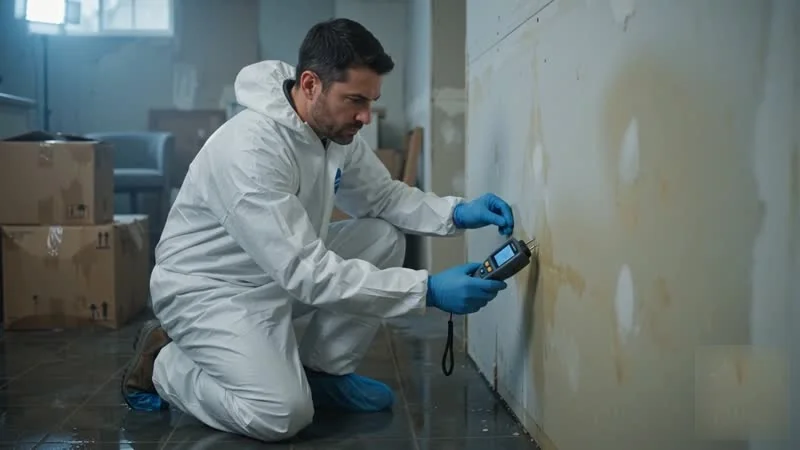
The consequences of incomplete drying are almost always delayed — visible in months, not days. A wall cavity that retained moisture above the mold growth threshold dries on its surface within a few days (surfaces are always the first to dry) while the moisture inside continues to support mold growth. the IICRC S500 standard sets the procedural benchmark restoration companies are expected to follow.
Structural degradation from retained moisture is slower but ultimately more costly. Wood framing members and sub-floor sheathing that retain moisture above 20% moisture content over extended periods support wood decay fungi — slow-growing organisms that cause gradual structural strength loss without the visible surface characteristics of common mold.
Incomplete drying also affects the materials installed during reconstruction. New drywall installed over framing members that retain elevated moisture will absorb that moisture through capillary action, developing staining, soft spots, and mold from the back surface forward — an expensive and frustrating outcome for homeowners who believed their restoration was complete.
How Professional Drying is Monitored
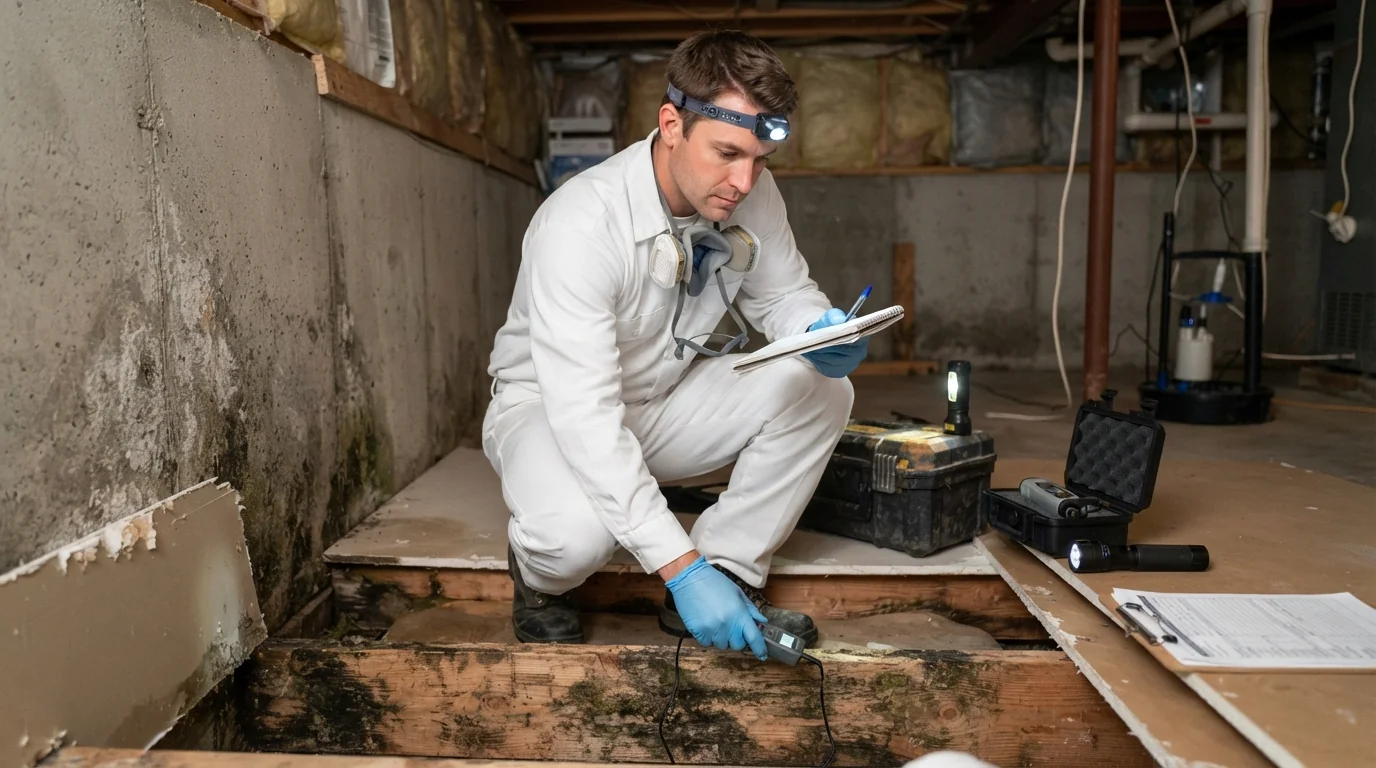
Daily moisture monitoring is the defining quality characteristic of professional structural drying. At the start of the drying program, technicians establish a moisture map — a floor plan with measurement points marked at each location where elevated moisture was detected, with the baseline reading at each point recorded. the EPA provides background on how moisture control prevents mold growth in buildings. It's worth browsing our full list of restoration services to see which one matches what you're dealing with.
Measurement points that are not declining at the expected rate indicate one of several conditions: residual moisture source that was not detected in the initial assessment; wall cavity moisture that requires additional intervention (flood cuts or injection drying); or equipment placement that is not directing airflow effectively to that area. Real-time adjustment based on daily readings — repositioning air movers, adding dehumidification capacity, opening additional wall cavities — is what separates a professional drying program from equipment left in place and checked at removal.
Final clearance is documented when every measurement point has reached its target moisture level, verified with the same instruments that established the baseline. This clearance documentation — the final drying log showing all measurement points at target levels — is required documentation for insurance claims and provides the homeowner with verifiable evidence that drying was completed correctly.
What to Expect From a Professional Drying Program
The equipment footprint of a professional drying program is more significant than most homeowners expect. A 1,500-square-foot residential drying project might involve 8–12 industrial air movers positioned throughout the affected area, 2–3 commercial dehumidifiers, and potentially wall cavity equipment depending on the extent of penetration. FEMA's National Flood Insurance Program explains how the National Flood Insurance Program covers flood losses.
Equipment is typically accessed daily by the restoration team for monitoring and adjustment. You do not need to be present for monitoring visits, but the restoration company should contact you with a daily update on drying progress.
The drying program runs 24 hours per day — the equipment should not be turned off overnight. Some homeowners attempt to turn off the equipment at night to reduce noise or electricity costs; this disrupts the continuous airflow required for efficient drying and extends the overall drying time.