Ceiling fans and recessed or hanging light fixtures are among the most common locations where a roof leak becomes immediately visible in a Phoenix home — and because these fixtures involve live electrical connections, the appropriate first response differs meaningfully from a leak affecting a bare ceiling area.
Why This Location Is Particularly Common
Ceiling fan and light fixture boxes create a penetration through the ceiling drywall, and the electrical box itself often provides a natural collection point for water traveling along the top of the ceiling material. Water reaching this junction point frequently drips directly through the fixture opening rather than simply staining the surrounding drywall, which is why dripping from a fan or light fixture is often the very first sign a homeowner notices, sometimes before any visible ceiling staining has developed. Read more about our team and certifications if you want to know who will be showing up at your door.
The First Three Actions, In Order

First, do not touch the fixture, its switch, or its pull chain if it is wet or has visible water dripping from it. Second, if it is safe to reach the breaker panel without walking through standing water, turn off the circuit serving that fixture — or the main breaker if you are unsure which circuit it is on. Third, place a container beneath the fixture to catch dripping water and move any furniture or valuables away from the drip zone, without touching the fixture itself. If a situation like this is happening right now, you can request emergency service and we'll get moving.
What Not to Do
Do not attempt to remove the fixture yourself, even with the power off, since standing water or moisture may still be present within the electrical box and wiring behind it. Do not run the ceiling fan "to help dry it out" — this is a serious hazard, since a wet fan motor or wiring can short circuit or, in rare cases, create a fire risk. Do not simply towel-dry the visible fixture surface and assume the situation is resolved, since water may have already reached the wiring within the ceiling cavity regardless of how the exterior of the fixture appears. For background from an independent source, see the EPA's guidance on moisture and mold.
What Professional Response Involves
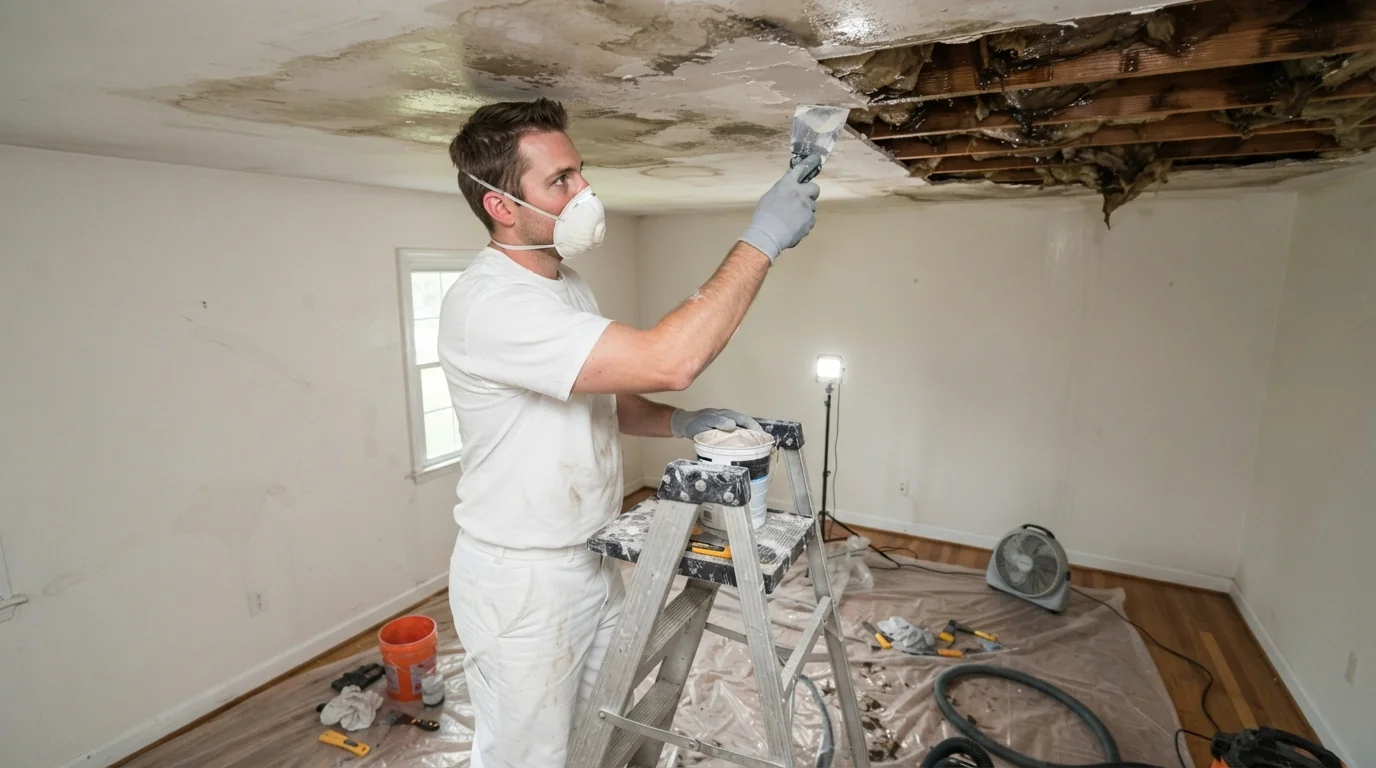
A restoration technician will assess the extent of water intrusion around the fixture location using thermal imaging to trace the moisture pathway, while coordinating with a licensed electrician to inspect the fixture, junction box, and associated wiring before it is safely reconnected or replaced. In many cases, the fixture itself needs replacement rather than reuse, particularly if corrosion is found within the electrical connections. the IICRC S500 restoration standard has useful guidance on this if you want to read further.
After the Immediate Hazard Is Addressed
Once the electrical safety concern is resolved, the underlying roof leak repair and interior structural drying follow standard structural drying protocols, addressing the ceiling drywall, any affected insulation, and framing moisture before the fixture location is restored and a new or repaired fixture reinstalled. You can also review the Insurance Information Institute's claims overview for an outside perspective on this.