Wall cavities, ceilings, and attics all commonly contain insulation, and how that insulation is handled has a direct effect on whether structural drying actually resolves the moisture problem.
Fiberglass Batt Insulation
Fiberglass batt insulation can theoretically be dried in place in limited-saturation scenarios, but in practice it's frequently removed and replaced because it compresses and loses much of its insulating loft once wet, and drying it fully in place inside a closed wall cavity is difficult to verify. Many restoration companies default to removal for fiberglass batts that have been directly saturated rather than attempting in-place drying. We've answered a lot of related questions on answers to common questions.
Blown-In Cellulose Insulation
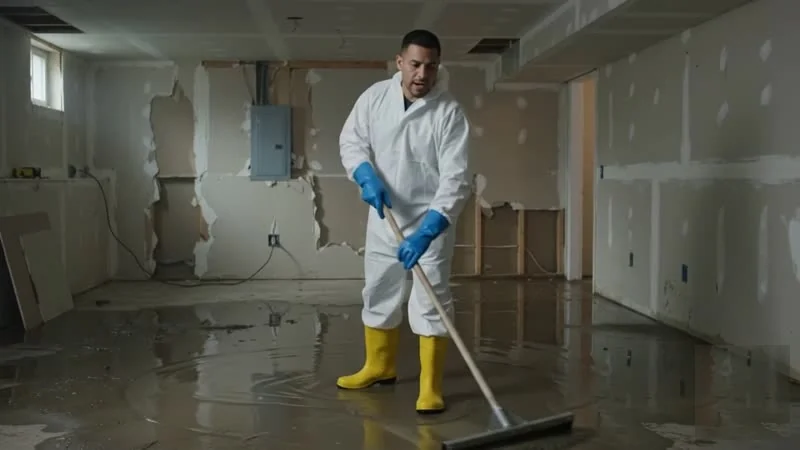
Cellulose insulation, common in older Phoenix homes and attics, absorbs water readily and tends to compact and mat down once wet, permanently reducing its insulating value even after drying. Saturated cellulose is almost always removed rather than dried, both because of this permanent loss of performance and because wet, compacted cellulose creates favorable conditions for mold growth. This applies across the Phoenix-area neighborhoods we serve, not just one part of the city.
Spray Foam and Closed-Cell Insulation
Closed-cell spray foam is largely water-resistant by design and typically doesn't absorb water the way batt or blown-in insulation does, which means it often doesn't need to be removed after a water event — though the framing behind it still needs to be verified dry. Open-cell spray foam is more absorbent and is evaluated case by case. For background from an independent source, see the IICRC S500 restoration standard.
Why Wall Cavity Insulation Complicates Drying
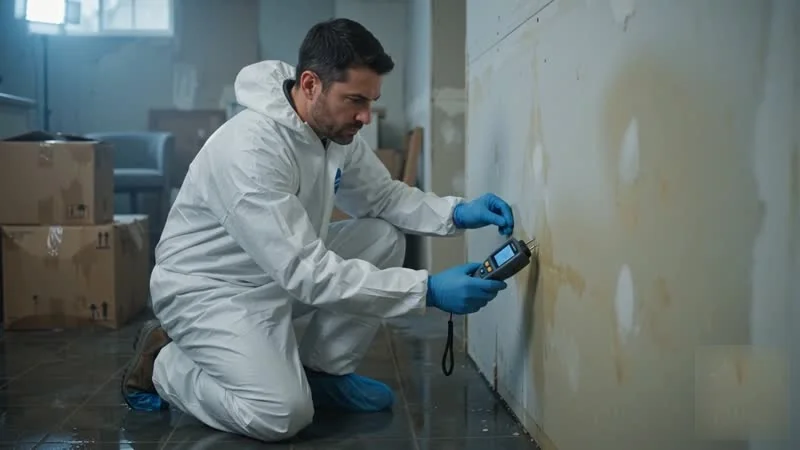
Insulation inside a wall cavity can trap moisture against the back of drywall and framing, slowing the drying of both even when the insulation itself doesn't need replacement. This is one of the main reasons restoration technicians sometimes recommend removing a strip of drywall at the base of a wall — to access and assess the cavity's insulation and framing directly rather than guessing at conditions behind an intact wall. the EPA's moisture control guidance has useful guidance on this if you want to read further.
How This Decision Affects Your Drying Timeline
Removing saturated insulation early actually shortens the overall drying timeline in most cases, because it eliminates a slow-releasing moisture source that would otherwise keep re-humidifying the wall cavity throughout the drying program. Attempting to dry heavily saturated insulation in place, by contrast, often extends the timeline without a reliable guarantee of success. You can also review the Department of Energy's ventilation and humidity guidance for an outside perspective on this.