How Loud Is Extraction Equipment?
Truck-mounted extractors run outside but the hose and wand work indoors still produces noticeable noise, comparable to a shop vacuum. Air movers and dehumidifiers used during the drying phase that follows run continuously and are typically compared to a box fan or air conditioner in terms of ambient sound. It's worth browsing our full list of restoration services to see which one matches what you're dealing with. If cost is on your mind, how our pricing works breaks down what typically drives the number up or down.
Living in the Property During Restoration

For most residential jobs, it's possible to remain in the home during extraction and drying, though the affected rooms will be inaccessible or partially blocked by equipment for the duration. Extraction itself is usually brief; the drying phase with running equipment is the longer disruption, often three to five days. If you want to go deeper on this, our guide on Dehumidification After Water Damage: The Science of Moisture Removal covers it well. We also break this down further in Relative Humidity vs. Specific Humidity: What Drying Techs Actually Measure.
Managing Equipment Runtime and Power Use
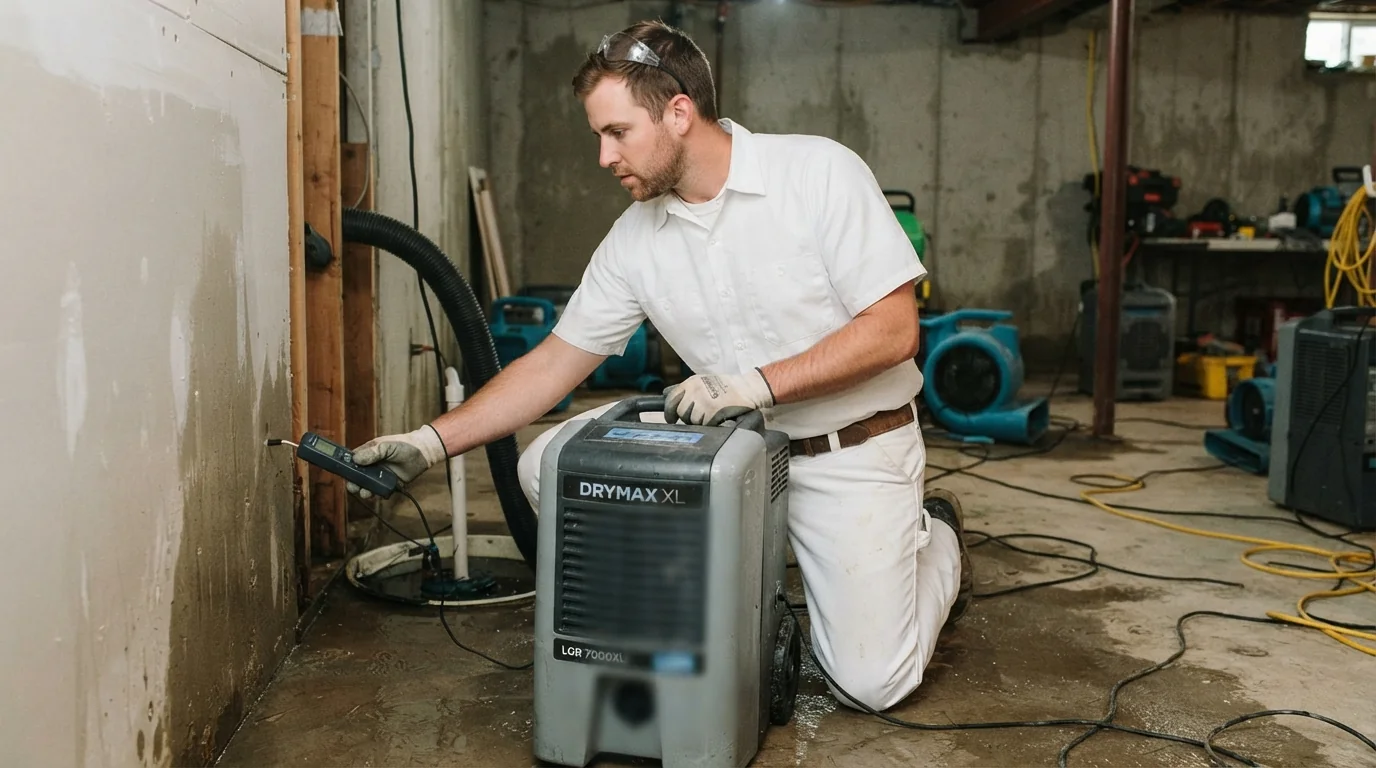
Dehumidifiers and air movers typically run 24 hours a day during active drying to maintain consistent conditions — turning them off overnight or during the day significantly extends the drying timeline and isn't recommended even though the noise can be tiresome. For a related situation, see our post on Structural Drying Explained: The Science Behind Water Damage Recovery. For background from an independent source, see the IICRC S500 restoration standard.
What Businesses Should Plan For
Commercial spaces need to weigh equipment noise against operating hours — some businesses schedule the loudest extraction work for closed hours and let quieter dehumidification run continuously through open hours instead. the EPA's moisture control guidance has useful guidance on this if you want to read further. You can also review the Department of Energy's ventilation and humidity guidance for an outside perspective on this.