Two-story homes and multi-level properties add a layer of complexity to structural drying that single-story homes simply don't face.
Why Water Moves Down, Not Sideways
Water follows gravity and the path of least resistance, which means a leak on a second floor typically travels straight down through floor joists and wall cavities to the ceiling and walls of the room directly below, rather than spreading evenly across the upper floor first. This is why ceiling staining on a first floor is often the first visible sign of a second-floor leak that's been active for some time. If cost is on your mind, how our pricing works breaks down what typically drives the number up or down.
The Ceiling-Floor Assembly Problem
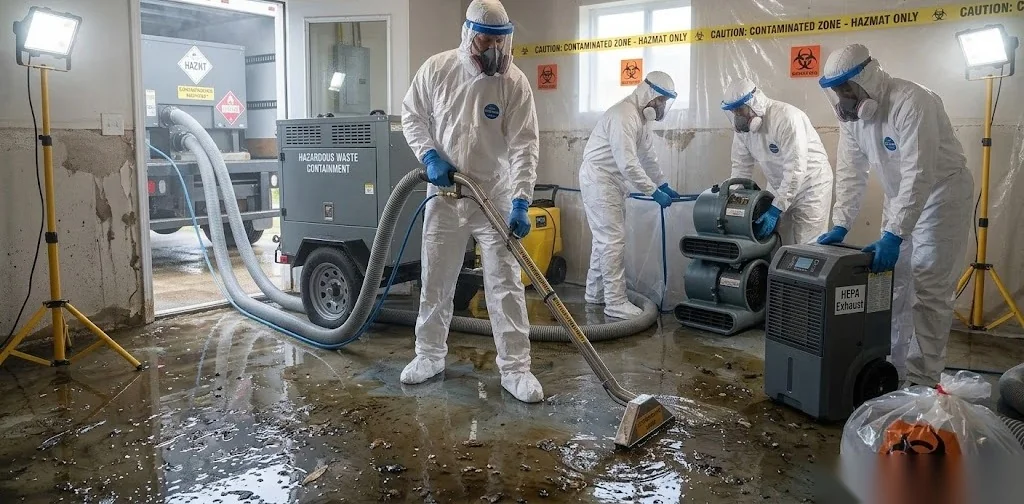
The assembly between floors — subfloor, joists, and the ceiling drywall of the room below — traps water in a confined cavity similar to a wall cavity, but oriented horizontally. This makes it one of the more difficult areas to dry effectively, since airflow has to be directed into a mostly enclosed space rather than across an open surface. For background from an independent source, see OSHA's workplace safety guidance.
Accessing the Floor-Ceiling Cavity
Technicians sometimes need to cut small access holes in the ceiling below to insert air movement equipment directly into the cavity, rather than relying on airflow alone to reach trapped moisture between floors. This can feel more invasive than other drying approaches, but it's often what allows the cavity to actually reach target moisture rather than staying wet indefinitely behind an intact ceiling. the IICRC S500 restoration standard has useful guidance on this if you want to read further.
Coordinating Drying Across Two Zones Simultaneously
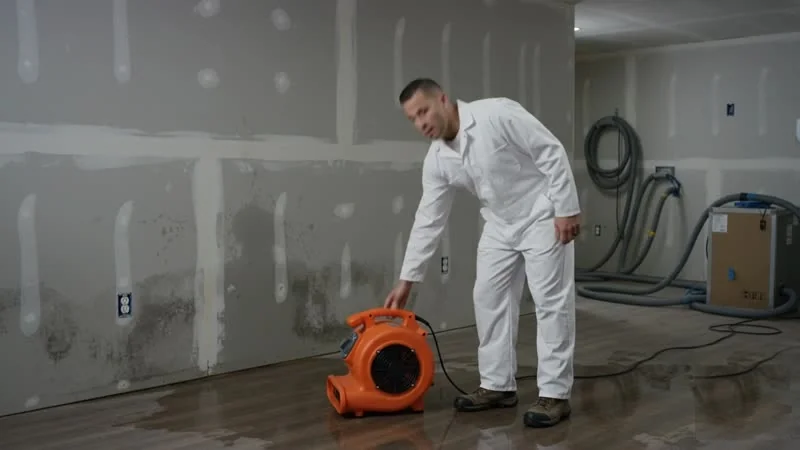
A multi-story leak often means running two connected drying chambers at once — the source room upstairs and the affected ceiling and walls downstairs — each requiring its own moisture mapping and equipment calculation, coordinated as part of a single overall drying plan. You can also review the Insurance Information Institute's business claims overview for an outside perspective on this.
What Homeowners Should Expect
Expect the drying scope to potentially expand beyond the room where the leak was first noticed, since a thorough assessment typically checks the full vertical path the water could have traveled, not just the immediately visible damage.